Xoang Dance
Master Vietnamese Xoang Dance photography: Discover unique timing, vibrant cultural immersion, and visual storytelling techniques for unforgettable shots.
Photography Guide for Xoang Dance in Kon Tum, Vietnam
The Xoang Dance is a vibrant cultural spectacle often performed by ethnic minority groups in Vietnam’s Central Highlands, particularly around Kon Tum. This traditional dance is more than just a visual performance; it’s a profound expression of community, spirituality, and life. For photographers, it offers a compelling blend of culture, travel, and nightscape opportunities, especially during evening gatherings and festivals. While the dance itself can be observed year-round in various contexts, understanding the nuances of its performance and the local environment is key to capturing its essence. This guide delves into the practical techniques and visual strategies necessary to photograph the Xoang Dance in Kon Tum, drawing on the insights of seasoned photographers who have navigated these unique cultural landscapes.
Photography Techniques for the Xoang Dance
Kon Tum province, with its rolling hills, distinct ethnic villages, and often dramatic evening skies, provides a rich backdrop for photographing the Xoang Dance. The dance is deeply intertwined with the community, and capturing it authentically requires an approach that respects the participants and their traditions. The genre of culture photography here is paramount, demanding not just technical skill but also a sensitivity to the moment. Travel photography also plays a significant role, as the journey to these performances often involves traversing picturesque, sometimes challenging, rural landscapes.
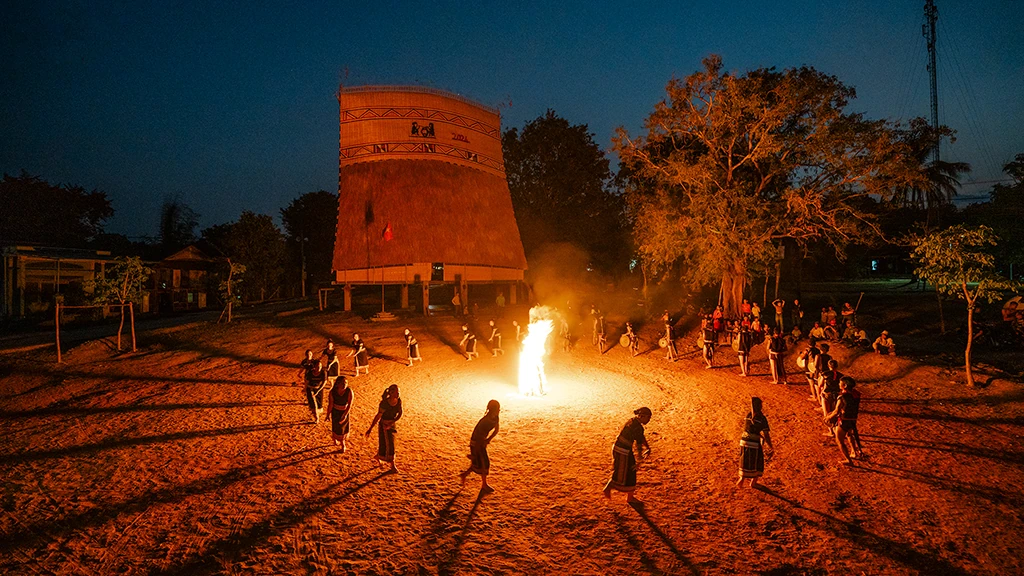
For those venturing into the highlands, understanding the context of the Xoang Dance is crucial. It's often performed during significant ceremonies, harvest festivals, and important community gatherings. While it can technically be photographed year-round, the intensity and frequency of performances might vary. However, the spirit of the dance remains a constant, offering photographers a window into the soul of the region. The nightscape aspect becomes particularly relevant as many performances culminate after sunset, illuminated by the warm glow of bonfires and traditional lanterns, creating a magical, low-light environment.
Compositional Strategies for Xoang Dance Photography
When composing your shots of the Xoang Dance, think about how to best convey the energy and communal spirit. Wide-angle lenses are excellent for capturing the scope of the dance, including the circle of dancers and the surrounding environment, which might include firelight, onlookers, and the starlit sky. However, don’t underestimate the power of a telephoto lens to isolate expressive faces, intricate traditional clothing, and the dynamic movements of the dancers. As Tran Tuan Viet, a renowned Vietnamese photographer, often emphasizes, paying attention to the details—the hands, the feet, the expressions—can tell as much of a story as the wider scene. Viet’s suggestion for capturing this scene involves looking for moments of genuine connection and emotion, which are often found in the periphery of the main action. This means being prepared to shoot from different angles and distances, constantly seeking fresh perspectives.
The circular nature of the Xoang Dance is a compositional element in itself. Try to capture the full circle to emphasize unity, or use leading lines created by the dancers' movements to draw the viewer’s eye into the frame. Experiment with shooting from a lower angle to give the dancers a sense of grandeur, or from a higher vantage point to provide a broader context. Experienced photographers in Vietnam suggest utilizing the dancers' own lines of sight and body language to create dynamic compositions. The interplay of light and shadow, especially during night performances, is another critical compositional element to consider, adding depth and drama to your images.
Capturing Movement and Emotion in Xoang Dance
Conveying the rhythm and spirit of the Xoang Dance through still images is a rewarding challenge. For capturing motion, a slow shutter speed can be used creatively to blur the dancers' movements, suggesting fluidity and energy. This technique, however, requires a steady tripod and careful control over exposure. Alternatively, using a fast shutter speed will freeze the action, allowing you to highlight individual gestures and the precision of the dance steps. The choice between these approaches depends on the story you want to tell: fluidity and energy versus precision and power.
Emotional capture is equally vital. Look for moments of joy, concentration, and spiritual engagement on the dancers’ faces. These are often fleeting, so be ready to shoot in bursts. The interplay between dancers and the audience, or between dancers and the firelight, can also create powerful emotional vignettes. Tran Tuan Viet recommends patiently observing the performers, understanding their rhythm, and anticipating those peak moments of expression. His advice, honed from years of photographing cultural events across Vietnam, is to be present and respectful, which often leads to more authentic photographic opportunities. Patience is a critical element in capturing genuine emotion; rushing the process can result in staged or unnatural images.
Nightscape and Low-Light Photography of the Xoang Dance
As many Xoang Dance performances take place after dusk, nightscape and low-light photography techniques become indispensable. The primary challenge here is the limited dynamic range of the scene—bright firelight juxtaposed with deep shadows and potentially dark skies. This requires careful exposure management. Shooting in RAW format is a must, providing the maximum flexibility for post-processing to recover shadow detail and control highlights.
Exposure bracketing is a highly recommended technique when dealing with such challenging lighting conditions. By taking multiple shots of the same scene at different exposures (one underexposed, one properly exposed, one overexposed), you can later merge them using HDR (High Dynamic Range) software to create an image with a wider tonal range. However, this is only feasible if your subjects are not moving significantly during the bracketed sequence. For capturing the dance itself under firelight, a different strategy is needed. Using a very high ISO setting (e.g., ISO 3200 or 6400, depending on your camera's capabilities) is often necessary to achieve a usable shutter speed that freezes or conveys motion appropriately. A lens with a wide aperture (f/1.4, f/1.8, or f/2.8) will also be a tremendous asset, allowing more light to reach the sensor.
According to Viet's experience photographing similar cultural night events, it’s crucial to find a stable shooting position, ideally with a tripod. Even with high ISO, a tripod can allow for longer shutter speeds if the dancers' movement is a creative element you wish to embrace. Be mindful of ambient light sources like bonfires and lanterns; these can provide beautiful, warm illumination that defines the dancers and their costumes. When possible, position yourself so that these light sources illuminate the dancers from the front or side, avoiding harsh backlighting that can obscure details. The atmospheric smoke from bonfires, when caught by the light, can add a mystical quality to your nightscape shots. Vietnam Photo Tours often includes dedicated night photography sessions where these techniques are practiced and refined.
Equipment and Settings for Xoang Dance
For photographing the Xoang Dance, a versatile camera setup is ideal. A DSLR or mirrorless camera with good low-light performance and manual controls is essential. Lenses that offer good low-light capabilities and focal length flexibility are highly recommended. A fast prime lens (e.g., 50mm f/1.4 or 35mm f/1.8) is excellent for low light and isolating details, while a mid-range zoom (e.g., 24-70mm f/2.8) provides versatility for both wider shots and tighter framing. A sturdy tripod is non-negotiable for low-light and nightscape photography.
When it comes to settings, there's no single magic formula. You'll likely be working in Aperture Priority (Av or A) mode to control depth of field and let the camera manage shutter speed, or in Manual (M) mode for complete control. Start with a wide aperture (low f-number). Experiment with ISO settings – push it as high as your camera can comfortably handle without unacceptable noise. Shutter speed will be the variable you adjust most, depending on whether you want to freeze action or show motion blur. For the Xoang Dance in Kon Tum, focusing can be tricky in low light. Utilize your camera's autofocus assist beam if available, or manually focus using live view magnification. Viet suggests practicing your manual focus techniques beforehand, as the rapid movements of the dancers can challenge even the best autofocus systems.
Navigating the Cultural Landscape for Xoang Dance
Photography in a cultural setting like the Xoang Dance requires more than just technical prowess; it demands an understanding and respect for local customs. Always seek permission before photographing individuals, especially children, and be mindful of any sacred or private areas. Engaging with the community, even with basic greetings, can open doors and lead to more meaningful photographic opportunities. When photographing the Xoang Dance, try to blend in and observe. Avoid intrusive behavior; your goal is to document, not to disrupt.
The best months to capture the Xoang Dance in Kon Tum are year-round, as performances occur at various times. However, the dry season (typically from November to April) generally offers more stable weather conditions, which can be beneficial for both the dancers and photographers, especially for nightscapes. The rainy season (from May to October) can bring dramatic skies and lush landscapes, but also presents challenges with equipment protection and unpredictable shooting conditions. Embracing these conditions, however, can lead to unique and atmospheric images. To truly master the art of capturing such rich cultural traditions, consider joining a guided experience.
Ready to capture the full potential of Xoang Dance in Kon Tum? Join our Vietnam Photo Tours to experience this location with expert guidance and master your photography.
More Scenes