Salt Pans
Vietnam Salt Pans photography: Master stark beauty, unique light, and compelling compositions for breathtaking visual stories. Your expert guide.
Salt Pans in Khanh Hoa, Vietnam
Vietnam’s coastline offers a tapestry of unique photographic opportunities, and the Salt Pans in Khanh Hoa province present a particularly compelling subject for landscape and conceptual photographers. Bathed in the intense tropical sun, these vast expanses of geometric salt fields transform into shimmering mirrors, abstract patterns, and poignant human landscapes. Capturing the essence of the Salt Pans requires understanding the interplay of light, texture, and the dedication of the salt farmers. This guide will equip you with the knowledge to transform these stark, sun-drenched scenes into powerful photographic narratives.
Mastering the Light and Environment
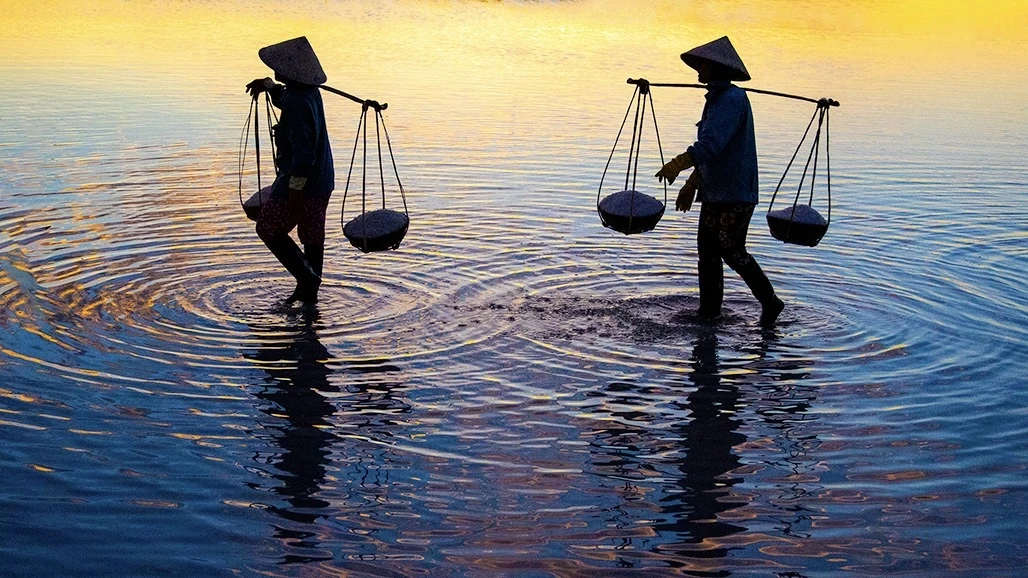
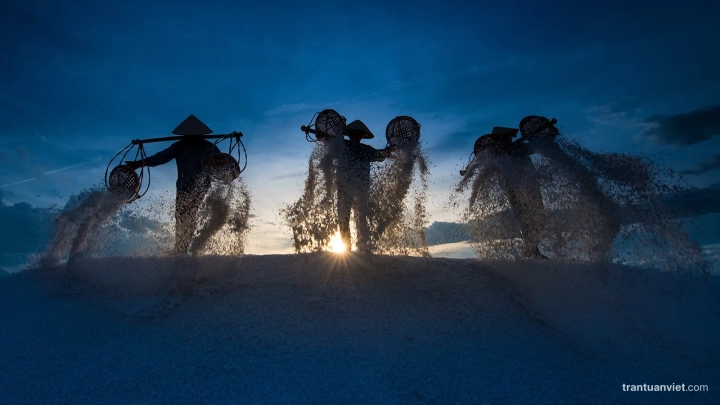
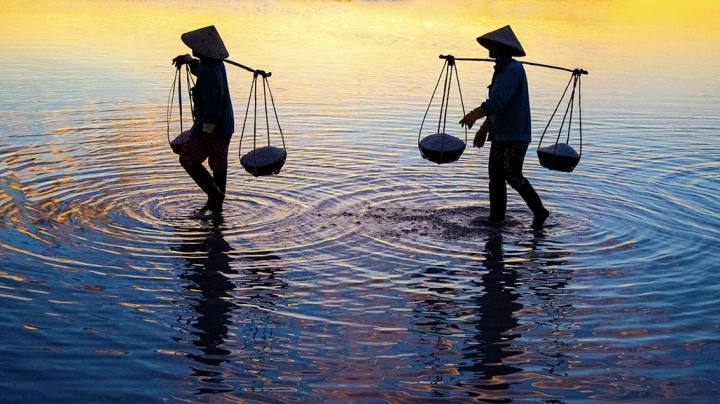
The Salt Pans in Khanh Hoa are most visually striking during the dry season, specifically from April through August. These months offer consistent sunshine, crucial for the salt-crystallization process and for achieving the reflective qualities that make this scene so photogenic. The intense midday sun, often a challenge in landscape photography, can be an asset here. It creates stark contrasts, high reflectivity, and dramatic highlights on the salt crystals and water surfaces. However, experienced photographers in Vietnam also recognize the magic of the golden hour. The soft, warm light of early morning and late afternoon casts long shadows, accentuates textures, and can render the water a painterly palette of pinks, oranges, and purples. Tran Tuan Viet suggests that the best times to shoot are often just after sunrise and before sunset, emphasizing the importance of the changing light. "Viet finds that the subtle shifts in color during these periods reveal details that are lost in the harsh midday glare, creating a more nuanced and emotive image of the Salt Pans," he notes.
Best Months for Capturing the Salt Pans
To maximize your chances of capturing the Salt Pans in their most photogenic state, aim for the months of April, May, June, July, and August. This period aligns with the dry season in the region, ensuring clear skies and the necessary conditions for abundant salt production, which in turn creates the most visually arresting scenes. During these months, the light is strong, allowing for high contrast and reflective imagery, while also offering opportunities for softer, more atmospheric shots during the dawn and dusk periods.
Understanding the Salt Pans as a Photographic Subject
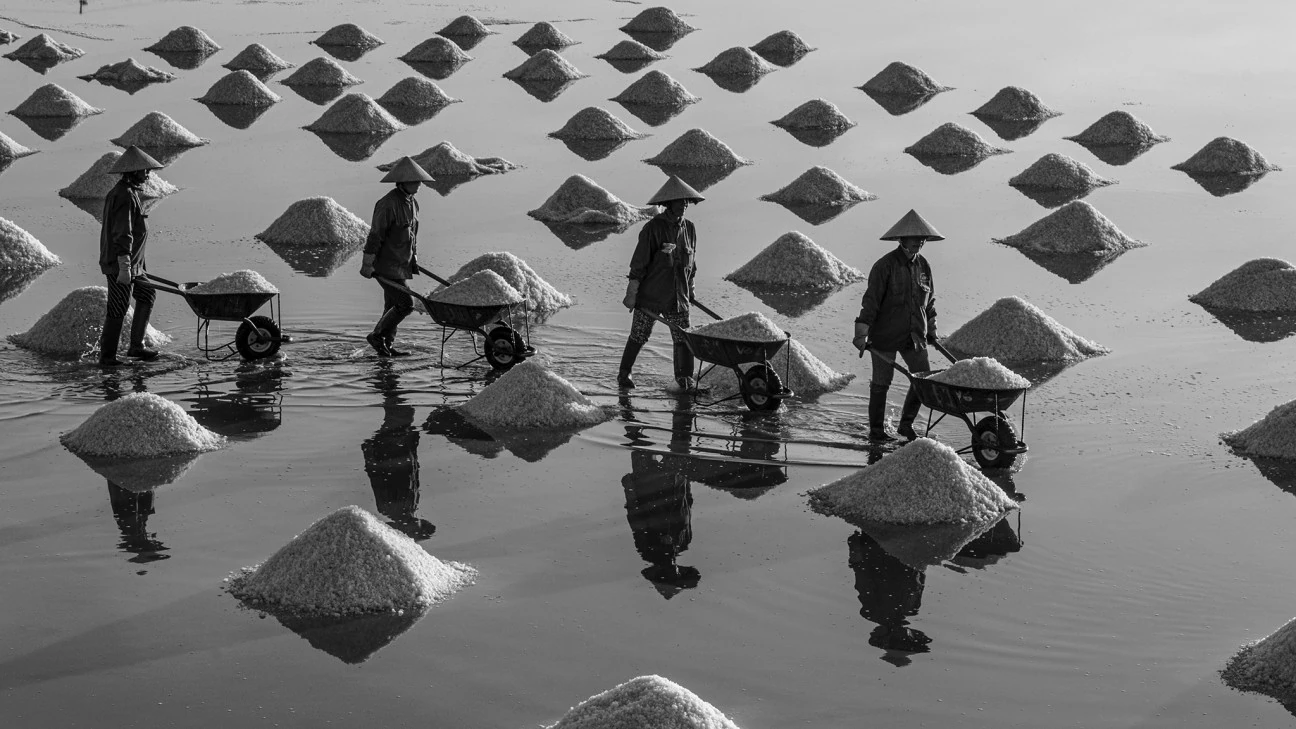
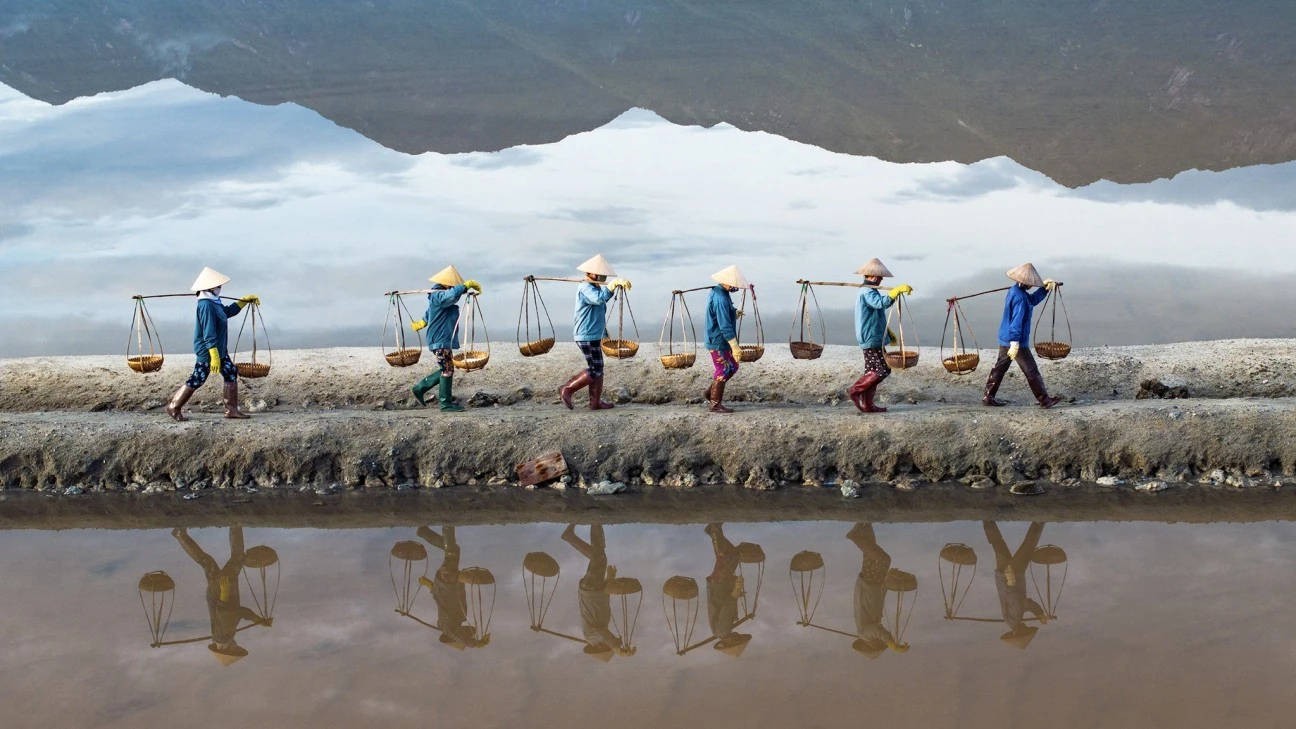
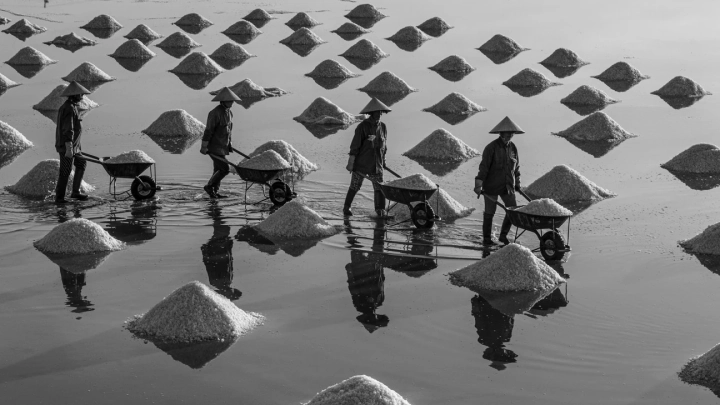
The Salt Pans are more than just a geographical feature; they are a testament to human endeavor and a dynamic interplay of natural elements. The geometric patterns formed by the evaporation ponds, the white crystalline salt contrasting with the deep blue or muddy brown water, and the solitary figures of the salt farmers working under the sun all contribute to a rich visual vocabulary. For landscape photographers, the sheer scale and the abstract beauty of the man-made patterns are a primary draw. For conceptual photographers, the scene offers a powerful commentary on labor, nature’s cycles, and the resilience of communities dependent on traditional industries.
Compositional Strategies for Salt Pans Photography
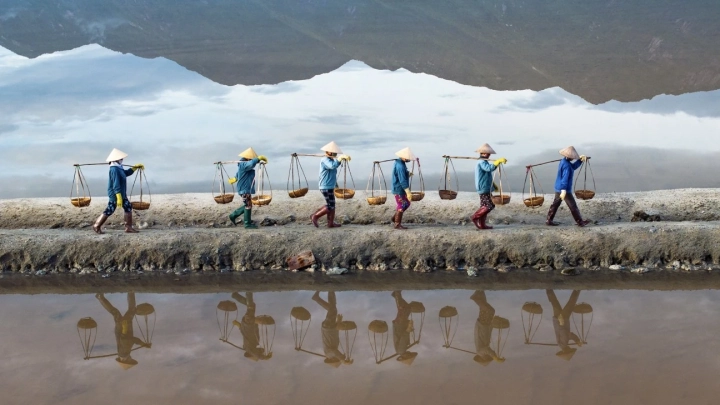
The inherent geometry of the Salt Pans provides an excellent foundation for strong compositions. The lines of the dikes and channels naturally lead the eye through the frame. Experiment with different perspectives. Shooting from a slightly elevated position, if available, can reveal the intricate network of ponds and channels, highlighting the patterns. Conversely, getting low to the ground can emphasize the reflective quality of the water and the textures of the salt. Leading lines are a critical element here; use the edges of the ponds to draw the viewer’s attention towards a focal point, whether it’s a distant farmer, a particularly striking cluster of salt, or the horizon line.
Abstract Patterns and Textures in Salt Pans
The Salt Pans are a dream subject for abstract photography. Look for the repeating shapes, the contrast between wet and dry salt, and the way the water reflects the sky. Consider using a telephoto lens to isolate interesting details and patterns within the larger scene. The crystalline structure of the salt itself offers incredible textural possibilities, especially when captured with sharp focus and good contrast. Viet's experience photographing such scenes reveals that "sometimes the most impactful shots come from focusing on the micro-details rather than the grand vista, finding beauty in the individual salt crystals and the way they form."
Including Human Elements in Salt Pans Photography
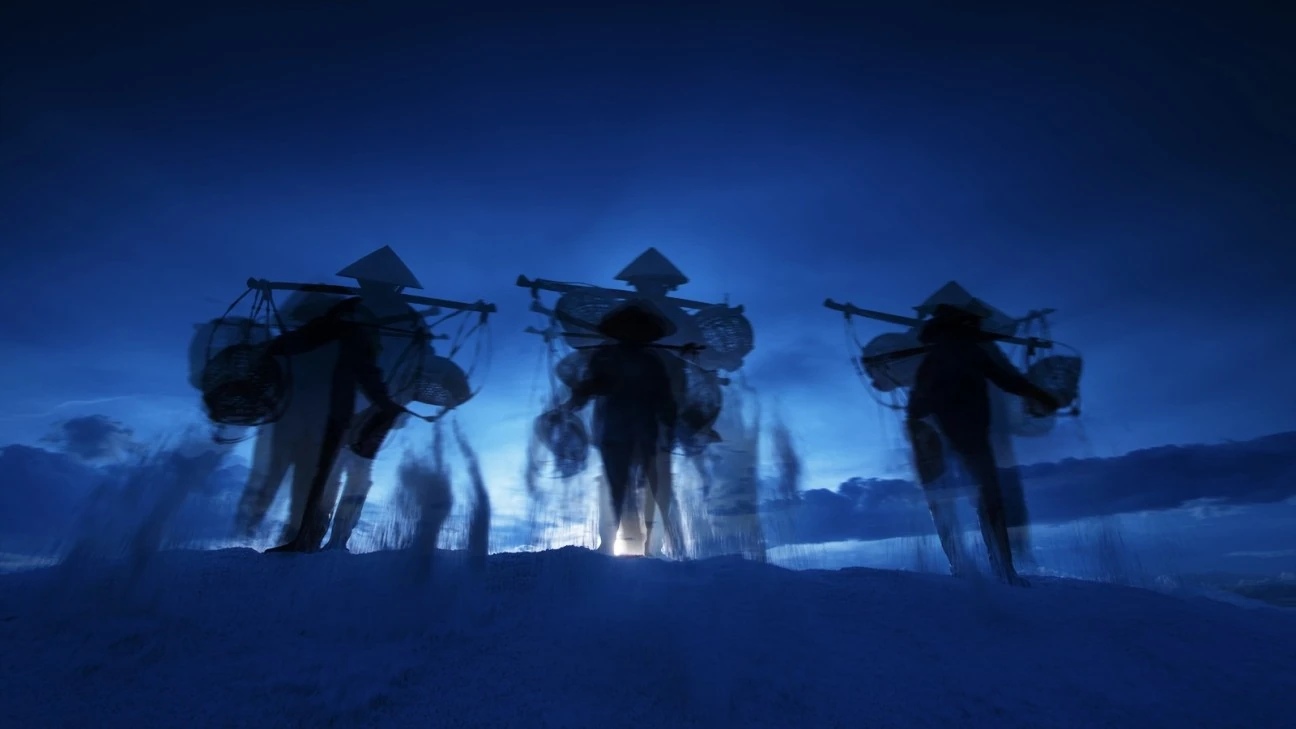
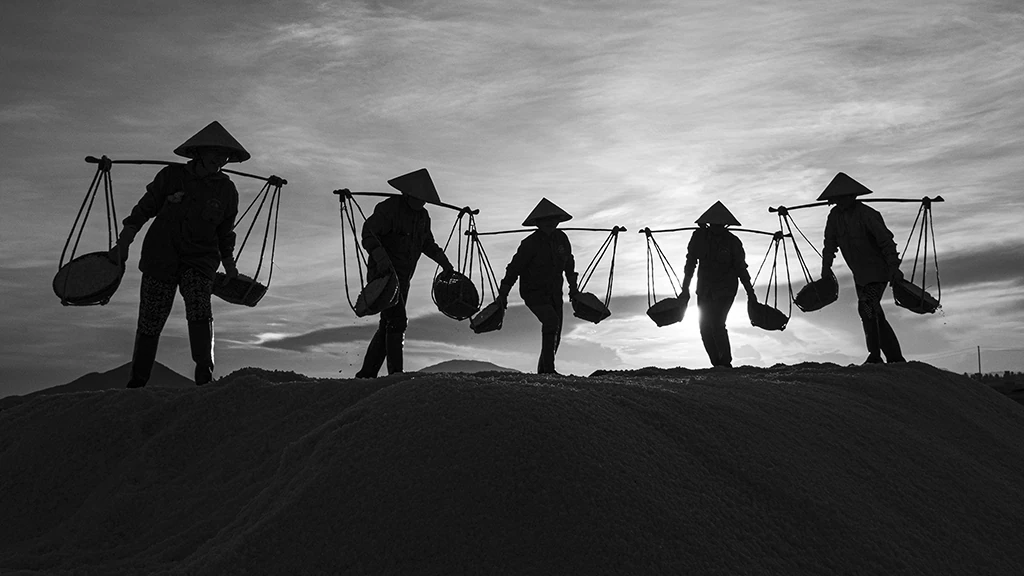
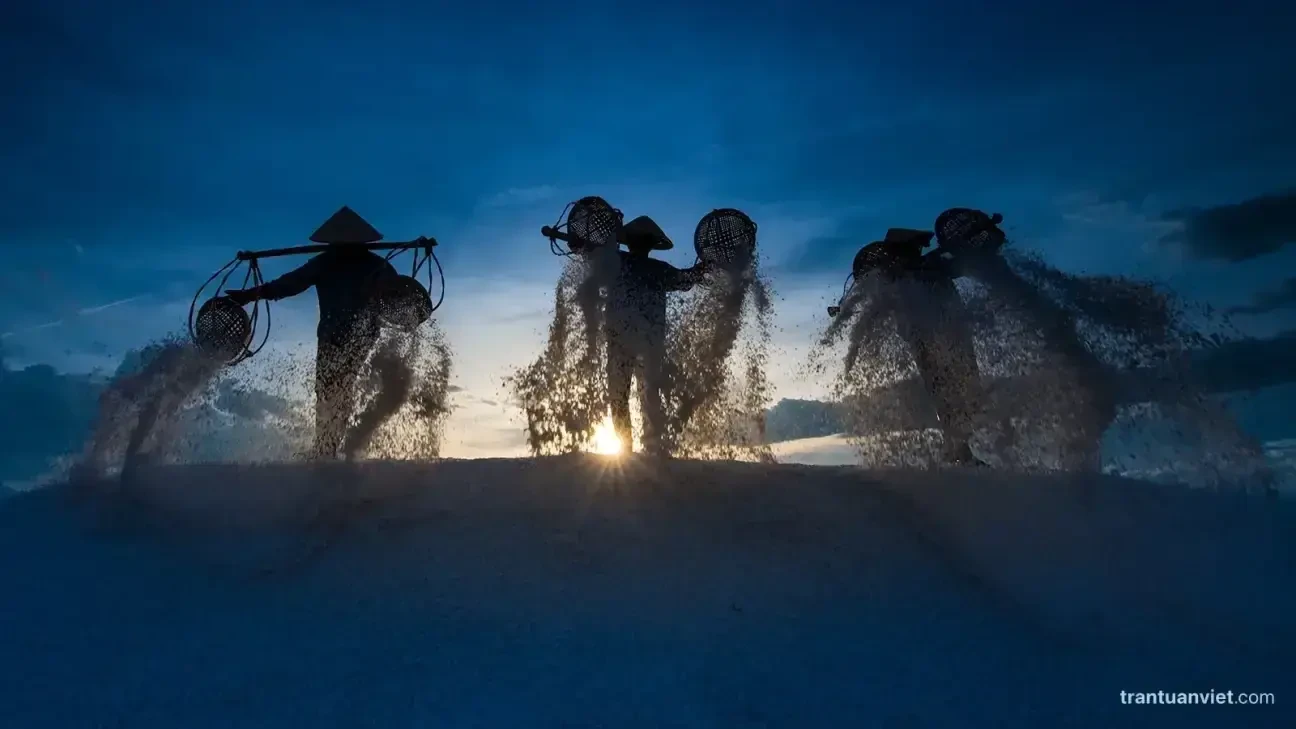
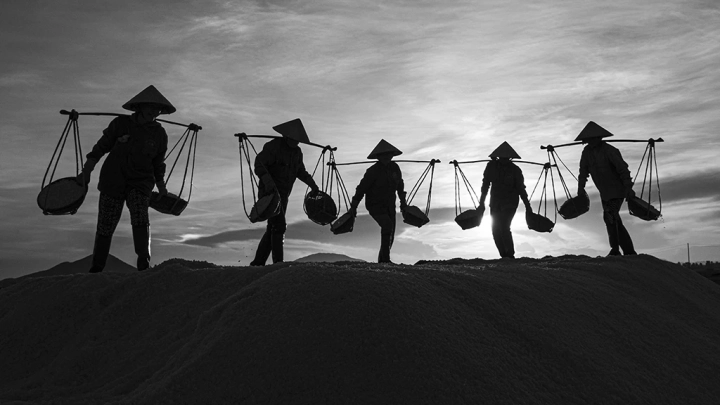
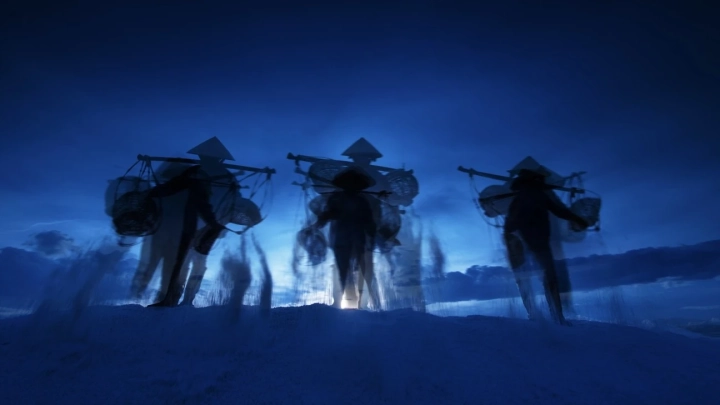
The human element adds a profound layer of storytelling to Salt Pans photography. The salt farmers, with their distinctive conical hats and their tireless work, are integral to the scene. Photographing them in their environment, especially during their daily routines, can create powerful conceptual images. Look for moments of interaction, moments of quiet reflection, or the sheer effort involved in their labor. Capturing them against the vastness of the salt fields emphasizes their connection to the land and their role in this traditional industry. For these shots, consider a slightly wider aperture to isolate the subject and create a pleasing bokeh.
Technical Approaches for Salt Pans Photography
When photographing the Salt Pans, managing the extreme contrasts between bright, reflective salt and water and potentially darker skies can be a challenge. The bright white salt can easily blow out highlights, while the water can absorb too much light, losing detail. Using a graduated neutral density (GND) filter is often a wise choice for landscape shots to balance the exposure between the sky and the foreground. In situations where you don't have filters, bracketing your exposures for High Dynamic Range (HDR) processing can be an effective solution. For conceptual shots focusing on the farmers, using a prime lens with a wide aperture can help isolate your subject and create beautiful background blur, drawing attention to their expressions and actions.
Focusing Techniques for Sharpness and Depth
Achieving sharp focus is paramount, especially when capturing the crystalline textures of the salt. In landscape compositions, consider using hyperfocal distance or focusing about one-third of the way into the scene to maximize depth of field, ensuring both the foreground patterns and the distant elements are acceptably sharp. When focusing on the salt farmers, a reliable autofocus system is beneficial, or manual focusing using live view with magnification can ensure precision. For abstract shots where you want to emphasize a specific texture, use single-point autofocus directly on the desired detail.
Essential Equipment and Settings for Salt Pans
A sturdy tripod is highly recommended for capturing sharp images, especially during the softer light of dawn and dusk, and for enabling longer exposures if desired. A range of lenses can be useful; a wide-angle lens (16-35mm on a full-frame camera) is excellent for grand landscapes and emphasizing the patterns, while a medium telephoto (70-200mm) is perfect for isolating details and compressing the scene, making the patterns appear more intricate. For settings, start with an aperture of f/8 to f/11 for landscapes to ensure good depth of field. For conceptual portraits, an aperture of f/2.8 to f/4 will create a shallower depth of field. ISO should generally be kept as low as possible, typically ISO 100, to maintain image quality and minimize noise. Understanding the exposure triangle – aperture, shutter speed, and ISO – will be key to mastering the challenging light conditions.
Conceptual Storytelling at the Salt Pans
Beyond the visual spectacle, the Salt Pans offer a canvas for profound conceptual exploration. Consider the themes of nature versus human intervention, the rhythm of the seasons, the physical toll of labor, and the serene beauty that can be found in seemingly harsh environments. Tran Tuan Viet often emphasizes that "the most compelling images tell a story, and the Salt Pans have many stories to be told." Viet recommends looking for those quiet moments, the gestures of the workers, or the dramatic interplay of light and shadow on the salt mounds to convey deeper meaning. Think about how the repetitive nature of the work is mirrored in the geometric patterns of the ponds, or how the vibrant colors of the sunset are temporarily reflected in the water, a fleeting beauty in a landscape of stark white and brown.
Ready to capture the full potential of the Salt Pans? Join our Vietnam Photo Tours to experience this location with expert guidance and master your photography. Our tours are designed to immerse you in the best locations at the optimal times, ensuring you have the best opportunities to create stunning landscape and conceptual images.
More Scenes