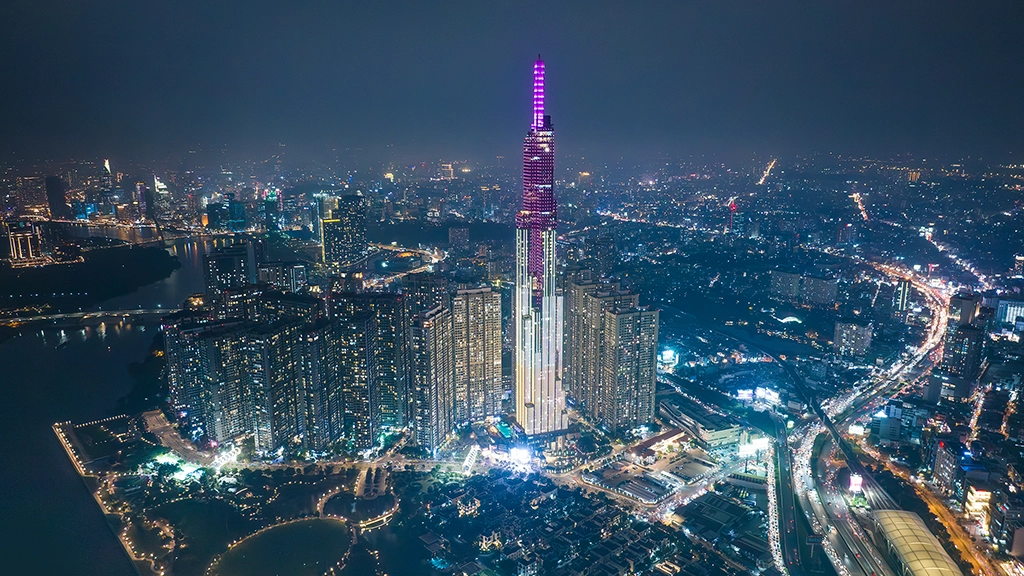
Saigon Skyline
Capture Vietnam's Saigon Skyline: Master dynamic light and unique angles for compelling urban storytelling. Your essential photography resource.
Saigon Skyline in Ho Chi Minh City, Vietnam
The Saigon Skyline of Ho Chi Minh City presents a dynamic canvas for photographers, blending historical architectural grandeur with the relentless ascent of modernity. This urban sprawl, a pulsating heart of Vietnam, offers unparalleled opportunities for landscape, nightscape, and drone photography year-round. Understanding the unique light, the city's relentless energy, and the best vantage points is key to capturing its essence. As a leading photography education provider in Vietnam, Vietnam Photo Tours aims to demystify these challenges and unlock the visual storytelling potential of this iconic location.
Capturing the Saigon Skyline
Ho Chi Minh City, formerly Saigon, is a city of striking contrasts. Its skyline is a testament to rapid development, with sleek skyscrapers piercing the sky, often standing in bold juxtaposition to colonial-era buildings and bustling street life below. Photographing this scene requires an appreciation for both grand vistas and the intricate details that define the city. The best months to capture the Saigon Skyline are indeed year-round, though the dry season (roughly December to April) offers clearer skies and more predictable weather, while the wet season (May to November) can bring dramatic, moody skies and vibrant reflections after rainfall.
Nightscape Photography of the Saigon Skyline
When the sun dips below the horizon, Ho Chi Minh City transforms into a dazzling spectacle of artificial lights. Nightscape photography here is about embracing the city's energy and its luminous glow. Experienced photographers in Vietnam suggest finding elevated positions, such as rooftop bars or observation decks, to gain a commanding view. For nightscapes, a sturdy tripod is non-negotiable to ensure sharp images during longer exposures. Use a relatively wide aperture (f/8 to f/11) to maintain sharpness across the scene and keep ISO as low as possible (100-400) to minimize digital noise.
The challenge with night photography in Ho Chi Minh City is its often high dynamic range. The bright lights of the buildings and the relative darkness of the sky can push your camera's sensor to its limits. To combat this, photographers often employ exposure bracketing, taking multiple shots of the same scene at different exposures. These bracketed images can then be merged in post-processing using techniques like HDR (High Dynamic Range) to reveal detail in both the highlights and shadows. Tran Tuan Viet recommends shooting in RAW format to retain the maximum amount of data for post-processing, allowing for greater flexibility when balancing these extreme light levels.
Landscape and Drone Perspectives on the Saigon Skyline
For landscape photographers, the Saigon Skyline offers a constantly evolving panorama. Early mornings, just before sunrise, provide a softer, more diffused light, while the "blue hour" – the period shortly after sunset and before complete darkness – offers a beautiful transition with rich, saturated colors in the sky and the emergence of city lights. Wide-angle lenses (16-35mm on a full-frame camera) are excellent for capturing the expansive nature of the skyline, allowing you to include foreground elements like the Saigon River or vibrant street life to add context and depth. However, don't discount telephoto lenses (70-200mm) for isolating specific architectural details or creating compressed perspectives that emphasize the sheer density of the urban environment.
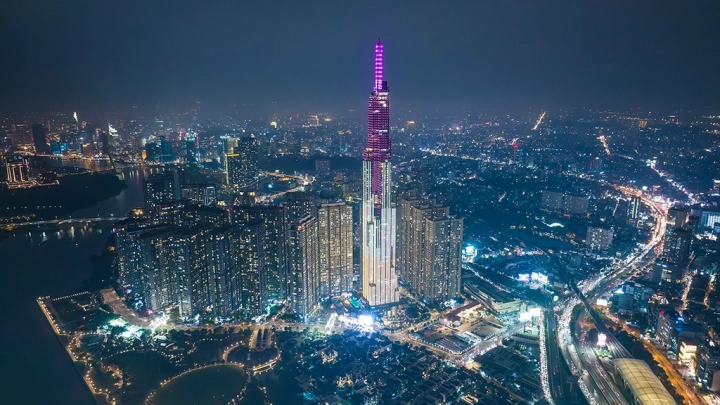
Drone photography unlocks a completely new dimension for capturing the Saigon Skyline. Authorized drone pilots can capture breathtaking aerial perspectives, revealing the intricate patterns of the city's layout and the sheer scale of its development. From the air, you can showcase the winding Saigon River, the iconic Bitexco Financial Tower, and the vast urban tapestry stretching to the horizon. When flying a drone, consider shooting during the golden hour for warm, flattering light. Always be aware of local drone regulations, which can be strict in urban areas, and prioritize safety and ethical flying practices. Viet's experience has shown that combining drone shots with ground-level perspectives offers a comprehensive and compelling narrative of the city.
Compositional Strategies for Saigon Skyline Photography
When composing your shots of the Saigon Skyline, look beyond simply framing the tallest buildings. Consider leading lines, such as the Saigon River or illuminated roadways, to guide the viewer's eye into the scene. The rule of thirds remains a valuable guideline, but don't be afraid to experiment with symmetry, especially when photographing reflections or architectural patterns. According to Tran Tuan Viet, incorporating elements of daily life – a boat on the river, a busy street below – can imbue your landscape shots with a sense of place and human connection that generic cityscapes often lack. This blend of the man-made and the natural, or the modern and the traditional, is a hallmark of Vietnamese photography.
For nightscapes, focus on creating a strong focal point. This could be the spire of a prominent skyscraper, a cluster of brightly lit buildings, or even the contrast between the city lights and the darkness of the sky. Long exposures can also be used to capture the light trails of vehicles on the streets below, adding a sense of movement and dynamism to your images. Experiment with different shutter speeds; slower speeds will create smoother, more ethereal light trails, while slightly faster speeds might capture more defined streaks. Viet often emphasizes the importance of capturing the vibrant colors of the city at night, advising photographers to ensure their white balance is set correctly or to adjust it in post-processing to best represent the scene's atmosphere.
Equipment and Technical Considerations for Saigon Skyline
The best camera for capturing the Saigon Skyline would be one with good low-light performance and manual controls, allowing for precise adjustments to exposure and focus. A full-frame or APS-C sensor camera is generally recommended for its superior image quality, especially in challenging lighting conditions. Lenses are also crucial; a versatile zoom lens covering wide to standard focal lengths (e.g., 24-70mm) is invaluable for landscape shots. For night photography and potentially capturing distant details, a fast prime lens (e.g., 50mm f/1.8 or 35mm f/1.4) can be beneficial, offering excellent low-light performance and shallow depth of field for selective focus.
When shooting in Ho Chi Minh City, especially from elevated positions, be prepared for varying light conditions and potential atmospheric haze. Using a circular polarizer can help reduce reflections on glass surfaces and enhance the saturation of the sky. For drone photography, ensure your batteries are fully charged and you have enough memory cards. Mastering manual focus can be critical for night photography, particularly if autofocus struggles in low light; using live view to zoom in on distant lights and fine-tune focus is a common technique. Experienced photographers in Vietnam also stress the importance of understanding your camera's capabilities and limitations, especially when dealing with the city's complex lighting scenarios.
Ready to capture the full potential of the Saigon Skyline? Join our Vietnam Photo Tours to experience this location with expert guidance and master your photography.