Incense Village
Master Incense Village photography in Vietnam: Discover unique sensory details, cultural traditions, and atmospheric lighting for captivating shots.
Incense Village in Ha Noi, Vietnam: Photography Guide
Vietnam’s cultural heart beats with traditions that offer photographers a profound visual narrative. Among these, the Incense Village, nestled near Ha Noi, stands as a testament to intricate craftsmanship and spiritual dedication. This location provides a unique opportunity to capture moments of quiet artistry, vibrant traditions, and the essence of Vietnamese daily life. Unlike more transient festivals, the creation of incense is a year-round endeavor, making it an accessible subject for photographers throughout the year. The constant production, coupled with the distinct visual elements of drying incense sticks and the dedicated artisans, creates a timeless appeal.
Photographing the Incense Village is about more than just documenting a craft; it’s about immersing yourself in a sensory experience. The air is often thick with the fragrant aroma of sandalwood, agarwood, and other natural materials. Visually, the scene transforms with the light, from the soft, diffused morning light that highlights the meticulous work of the artisans to the warm glow of the late afternoon sun casting long shadows. This guide will explore practical techniques and visual strategies to help you capture the soul of this captivating Vietnamese tradition.
Ha Noi: Photography Techniques for the Incense Village
The Incense Village offers a rich tapestry of textures, colors, and human interaction, making it a dream location for cultural photography. The key to unlocking its photographic potential lies in understanding its unique rhythm and visual language.
Capturing the Artistry of Incense Making
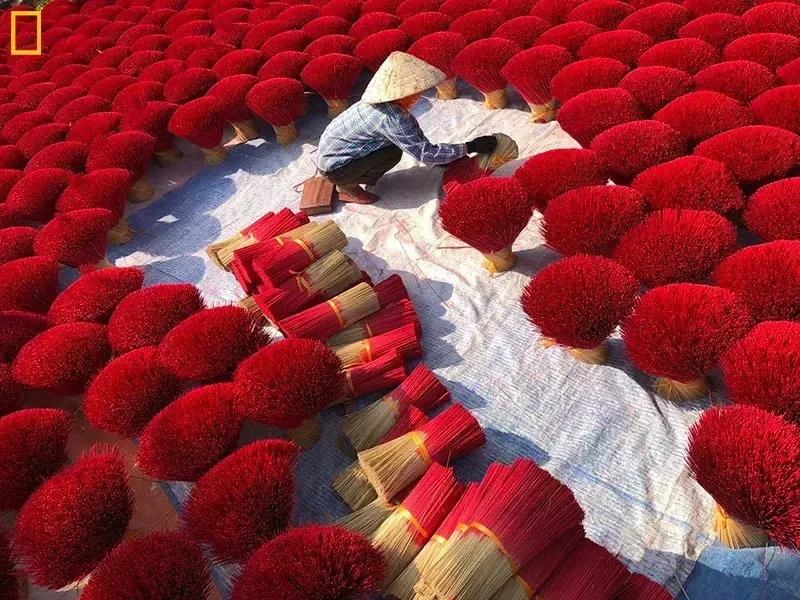
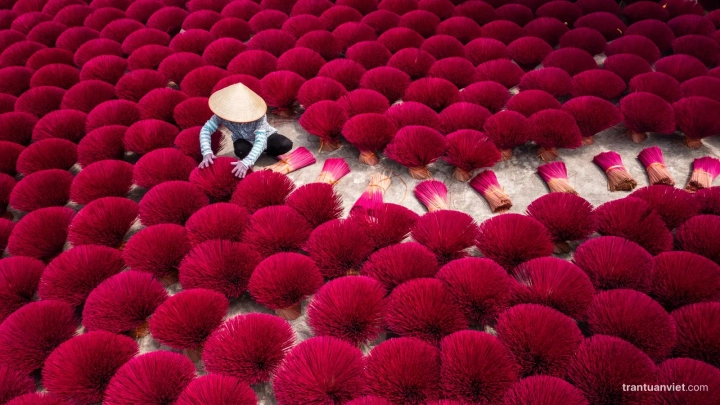
The process of making incense is an art form passed down through generations. Photographers should look for moments that showcase the skill and dedication of the craftspeople. This includes the precise way they mix the aromatic powders, the delicate rolling of the incense sticks, and the careful arrangement for drying. Patience is a virtue here; observe the artisans’ movements and anticipate their actions. A telephoto lens can be invaluable for capturing these intimate details without being intrusive, allowing you to isolate hands at work or the focused expressions of the individuals.
According to Tran Tuan Viet, a celebrated Vietnamese photographer whose work has graced National Geographic magazine, the human element is paramount. Viet suggests focusing on the connection between the artisan and their craft. "The story is in their hands, their eyes, and the sweat on their brow," he often shares. This perspective emphasizes that the most compelling images arise from genuine observation and a deep appreciation for the human narrative within the scene.
Working with Natural Light at Incense Village
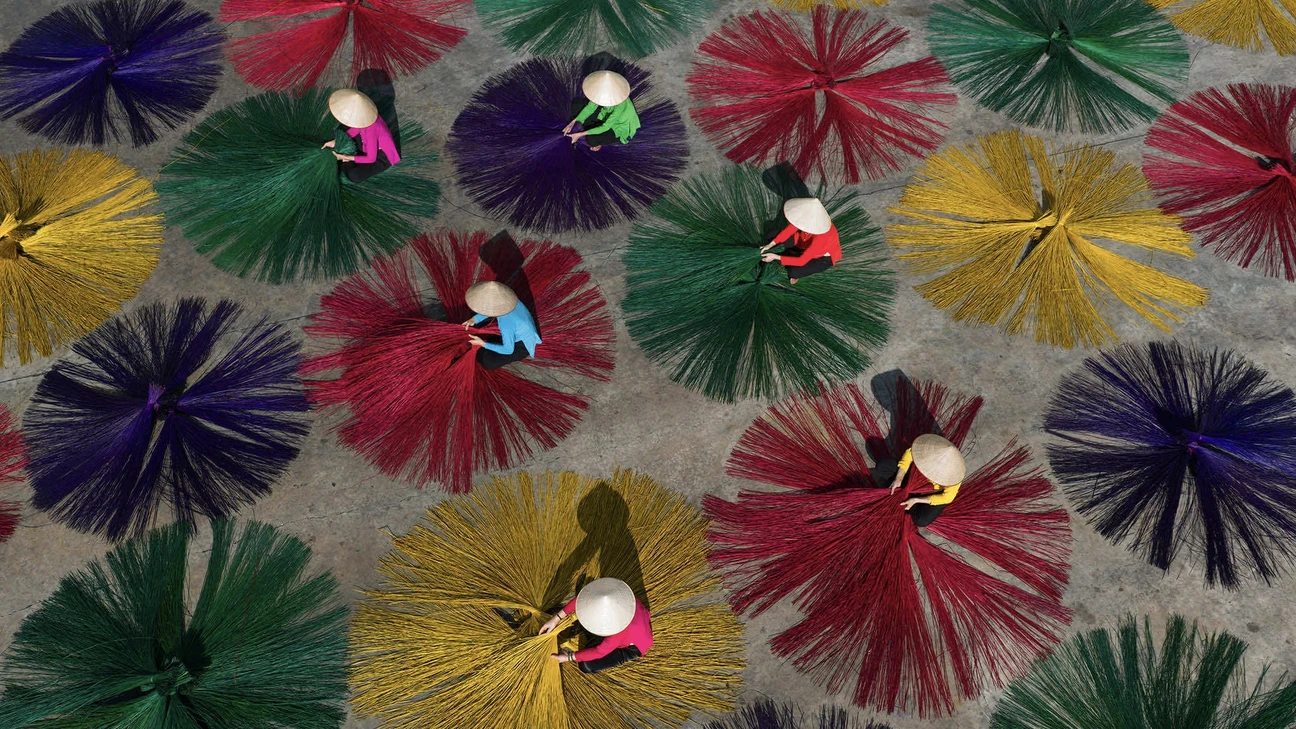
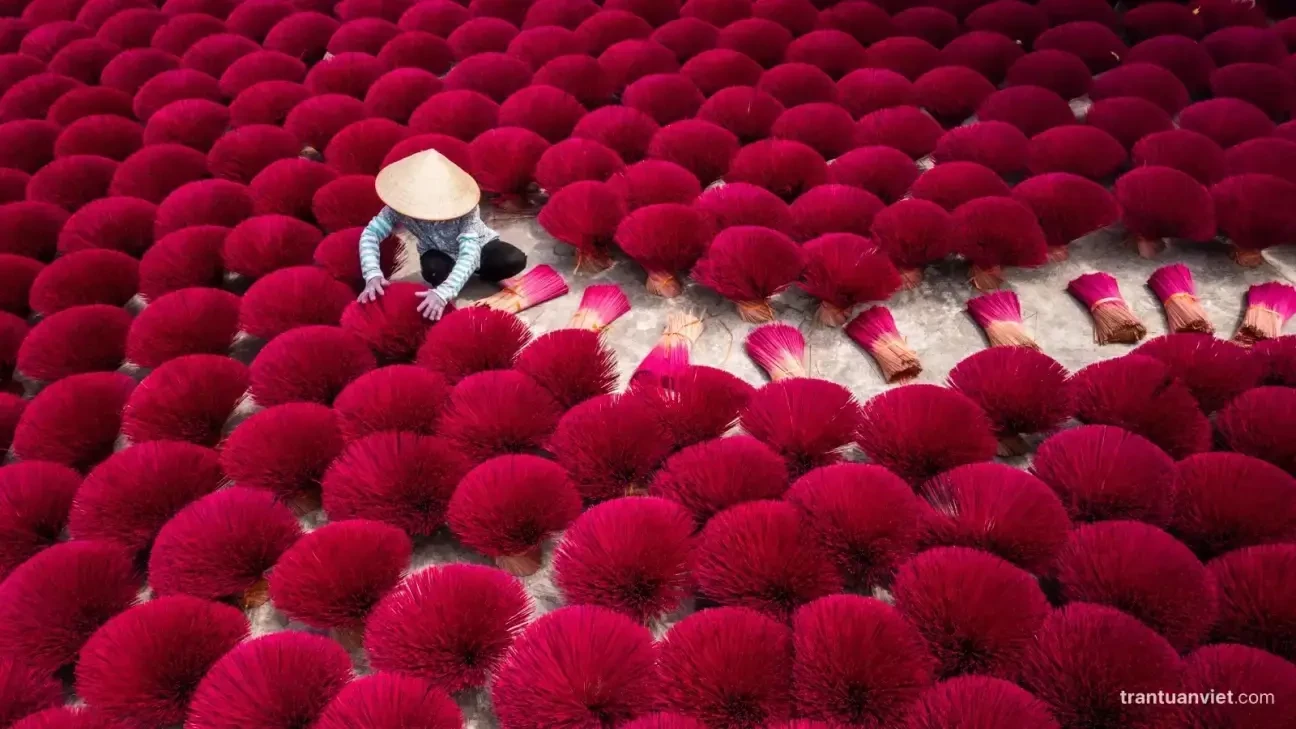
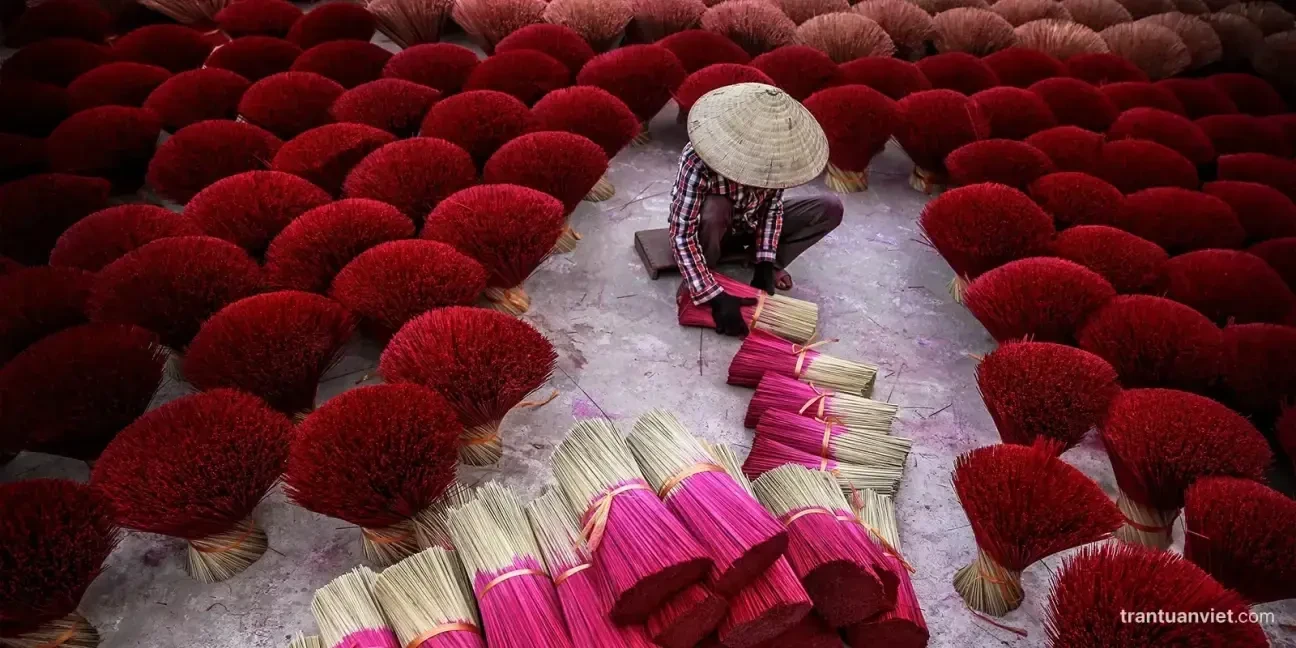
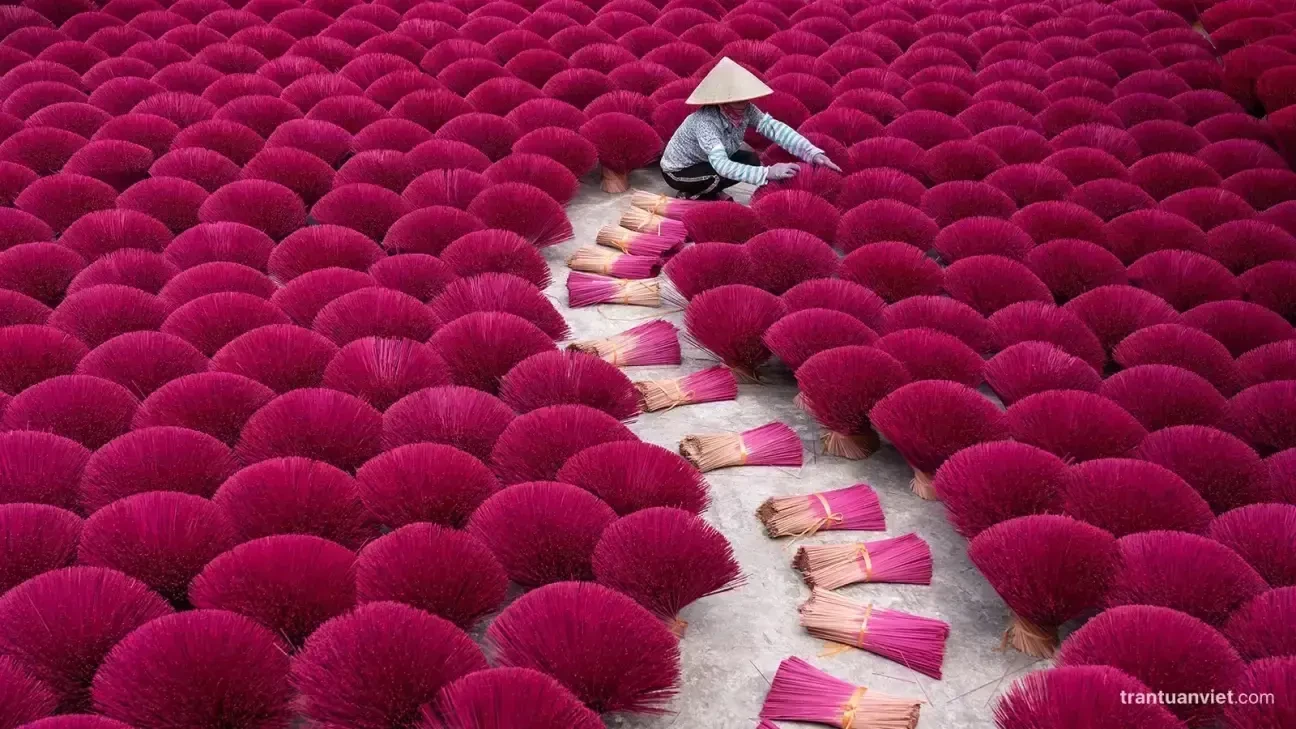
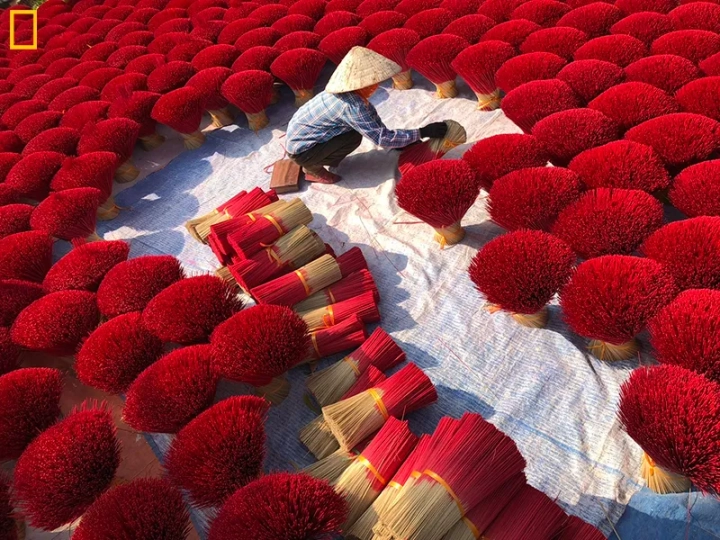
The Incense Village is bathed in natural light, which can be both a blessing and a challenge. Early morning light is often soft and diffused, perfect for capturing the subtle details of the incense-making process and the textures of the materials. As the day progresses, the light becomes harsher, creating strong contrasts. However, this can be used to your advantage. The iconic image of countless incense sticks drying in the sun, often arranged in large fields, is particularly striking in the midday or late afternoon sun. The strong light can create beautiful patterns and highlight the vibrant colors of the incense dyes.
Experienced photographers in Vietnam often recommend embracing the challenges of light. When shooting in harsh sunlight, consider using a polarizing filter to cut down glare and enhance saturation. For scenes with a narrow dynamic range, such as bright skies and deep shadows, bracket your exposures or use high dynamic range (HDR) techniques if appropriate for the desired aesthetic. Viet’s experience shooting this scene has taught him that even challenging light can be beautiful if you look for the right angles and moments.
Compositional Strategies for Incense Village
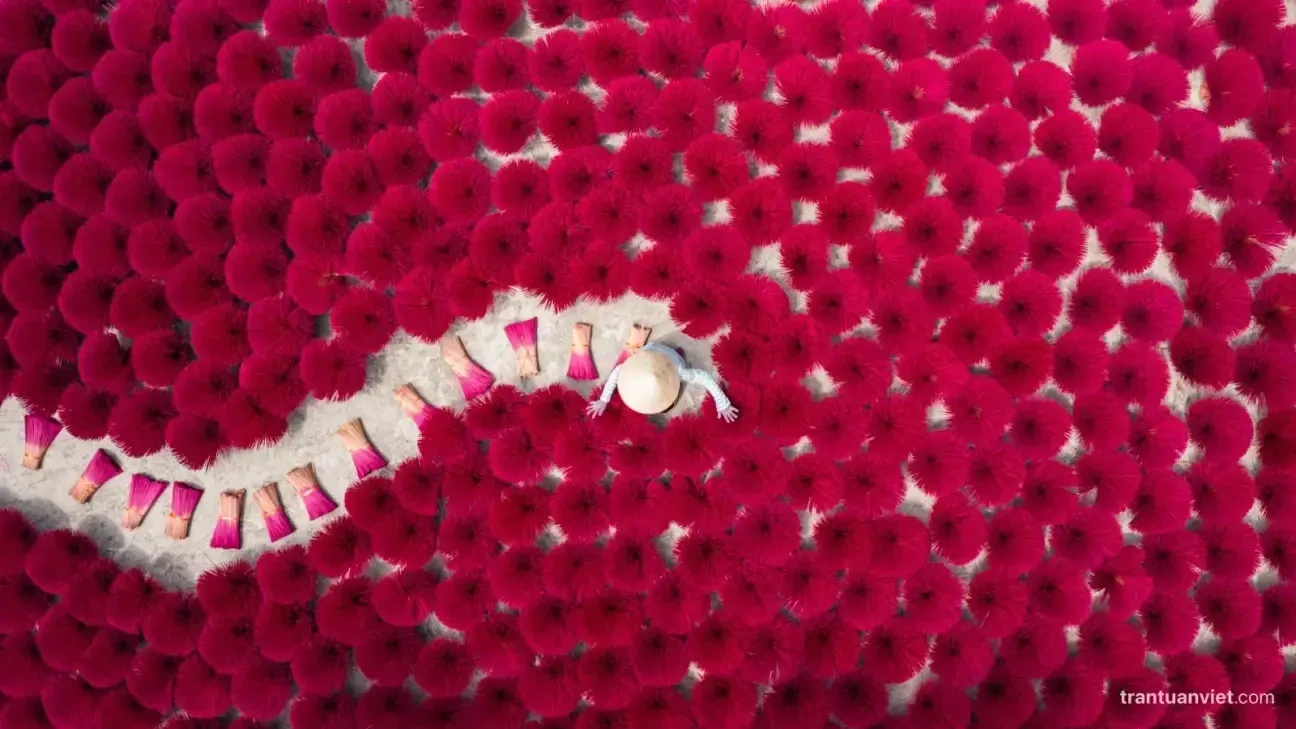
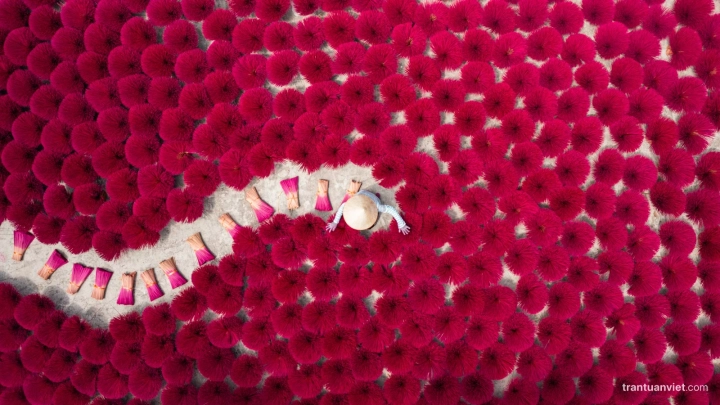
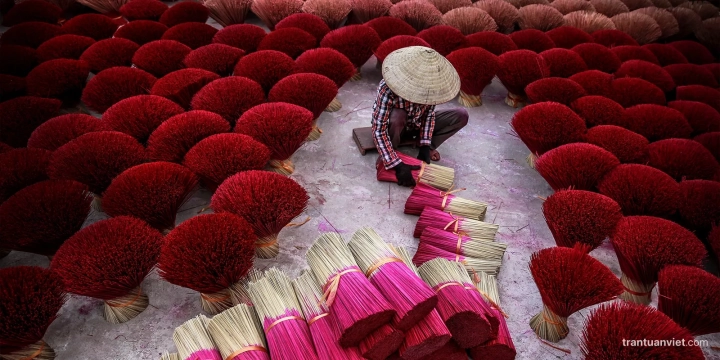
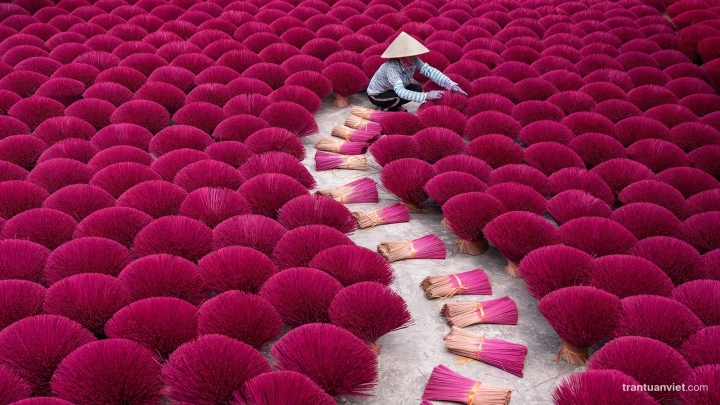
Composition is key to telling the story of the Incense Village effectively. Look for leading lines formed by rows of incense sticks, geometric patterns created by the drying racks, and the interplay of light and shadow. Don't be afraid to get low to the ground to capture the perspective of the incense sticks reaching towards the sky, or to frame the artisans against a backdrop of their creations.
Rule of thirds remains a fundamental guideline, but experiment with unconventional framing. Consider negative space; sometimes, an image is made stronger by what is excluded. Look for symmetry in the repetitive nature of the incense sticks, or break it intentionally with a single artisan focused on their task. Tran Tuan Viet recommends using patterns and repetition to draw the viewer’s eye into the frame, and then using a human subject to anchor the emotional connection.
Focusing on Color and Texture
The Incense Village is a riot of color, especially when the incense sticks are dyed in various hues of red, yellow, green, and blue. These vibrant colors are a critical element in many photographs. Pay attention to how the colors interact with each other and with the surrounding environment. The natural, earthy tones of the incense powder and the wood also provide a beautiful contrast.
The textures are equally compelling – the fine powder, the rough wood grain, the smooth, dried surface of the incense sticks, and the weathered hands of the artisans. Use a macro lens or a prime lens with a wide aperture to isolate these textures and create visually engaging close-ups. Sharp focus on the details is essential here to bring out the tactile quality of the materials. Using a tripod can greatly assist in achieving tack-sharp focus, especially in lower light conditions or when employing slower shutter speeds for artistic effect.
Seasonal Considerations and Timing
While the Incense Village can be photographed year-round, certain times might offer distinct visual advantages. The year-round nature of incense production means you'll always find activity, making it a reliable destination. However, the intensity of the sun and the humidity can vary.
Year-Round Opportunities
The best months to capture the Incense Village are technically year-round. The craft is continuous. However, photographers often find the dry season (roughly November to April) more comfortable for extended outdoor shooting. During this period, the skies are generally clearer, offering better light for the iconic outdoor drying scenes. The humidity is also lower, making the air less hazy. Conversely, the rainy season (May to October) can bring dramatic skies and lush green surroundings, offering a different mood and potentially fewer crowds.
Best Times of Day for Light
The golden hour – the period shortly after sunrise and before sunset – offers the most flattering light. This soft, warm light accentuates textures, creates beautiful color saturation, and casts long, pleasing shadows. Early morning is often best for capturing the start of the day's work, with artisans just beginning their tasks. Late afternoon light is superb for illuminating the vast fields of drying incense, transforming them into carpets of color under a warm glow. Midday sun, while challenging, can be used creatively to emphasize patterns and the vibrant colors of dyed incense.
According to Viet's suggestion for this scene, photographers should aim to arrive early in the morning to witness the process from its beginning and stay late to capture the changing light on the drying incense. This approach allows for a comprehensive visual story.
Equipment and Technical Tips
To effectively capture the Incense Village, consider a versatile camera setup that allows for both detail and context.
Lens Selection
A prime lens, such as a 35mm or 50mm, is excellent for capturing the atmosphere and the human element with a natural perspective. For details and portraits of artisans, a telephoto lens (70-200mm) is invaluable, allowing you to work discreetly. A wide-angle lens (16-35mm) can be useful for capturing the expansive fields of drying incense or the overall environment. For close-ups of textures, a macro lens or extension tubes can be beneficial.
Camera Settings and Focus
For general scenes, an aperture of f/8 to f/11 will ensure good depth of field. For portraits or isolating details, wider apertures like f/2.8 to f/4 will create a pleasing background blur (bokeh). Pay close attention to your shutter speed to avoid motion blur, especially when hand-holding your camera. In low light, a tripod is essential. When photographing the rows of incense sticks, experiment with focusing on different points within the lines to guide the viewer's eye. For capturing the intricate work of artisans, ensure sharp focus on their hands and tools.
The Incense Village is a profound experience, offering a glimpse into a vital Vietnamese tradition. By understanding its visual characteristics, mastering light and composition, and appreciating the human stories within, you can create truly memorable photographs. These insights are the foundation of what we share at Vietnam Photo Tours.
Ready to capture the full potential of Incense Village? Join our Vietnam Photo Tours to experience this location with expert guidance and master your photography.
More Scenes
Ao Dai Model
Blue Net
Ceramic Road