Ha Long Bay
Discover the amazing Ha Long Bay of Vietnam: Master emerald waters, karst light, and timeless boat life for your unforgettable photography portfolio.
Ha Long Bay in Vietnam: Photography Guide
Ha Long Bay, a UNESCO World Heritage site, presents an unparalleled canvas for photographers seeking to capture the essence of Vietnam's natural beauty. This iconic seascape, dotted with thousands of limestone karsts and islets, offers a dynamic range of photographic opportunities across landscape, travel, nightscape, and drone genres. While it's a destination that can be photographed year-round, understanding its specific nuances and employing targeted techniques will elevate your images from mere snapshots to compelling visual narratives. Vietnam Photo Tours recognizes the immense potential of this location and designs its expeditions to help photographers harness it.
Mastering Landscape Photography in Ha Long Bay
The sheer scale and dramatic topography of Ha Long Bay demand attention to composition and an understanding of light. When approaching this scene, photographers are often faced with a somewhat limited dynamic range between the bright sky and the shadowed karsts. This is where skillful exposure control becomes paramount.
Compositional Strategies for Ha Long Bay Photography
For landscape shots, embrace wide-angle lenses to encompass the vastness of the bay and the intricate formations of the karsts. Look for leading lines created by the water, the curves of the islands, or the paths of traditional junk boats to guide the viewer's eye. Consider the rule of thirds, placing key elements like a prominent karst or a passing boat at intersecting points. Negative space plays a crucial role here; the expansive water and sky can emphasize the isolation and grandeur of the geological features. Tran Tuan Viet, a celebrated Vietnamese landscape photographer, often emphasizes the importance of patience and observation. He suggests finding unique vantage points, perhaps from a higher deck on a cruise or even exploring smaller, less-frequented inlets, to capture compositions that stand out.
Capturing Ha Long Bay at Golden Hour
The periods around sunrise and sunset, the so-called golden hour, are magical for photographing Ha Long Bay. The low-angle light sculpts the karsts, casting long shadows and bathing the landscape in warm, ethereal hues. For sunrise, position yourself on the eastern side of your vessel to catch the first rays illuminating the islands. Sunset offers equally dramatic possibilities, with the karsts silhouetted against a vibrant sky. Experienced photographers in Vietnam often recommend using a graduated neutral density (GND) filter to balance the exposure between the sky and the foreground, preventing blown-out highlights or crushed shadows. Alternatively, bracket your exposures and blend them in post-processing for maximum detail in both the sky and the karsts.
Travel Photography and Cultural Immersion in Ha Long Bay
Beyond the majestic scenery, Ha Long Bay is alive with culture and human activity. Traditional fishing villages, the daily routines of the boat dwellers, and the iconic junk boats themselves offer rich storytelling opportunities.
Documenting the Life on Ha Long Bay
For travel photography, focus on capturing candid moments that reveal the character of the bay. The weathered faces of fishermen, the vibrant colors of their nets, and the gentle rhythm of life on the water are all compelling subjects. When photographing people, always seek permission and approach with respect. A medium telephoto lens can be useful for isolating details and capturing intimate portraits from a respectful distance. Consider the juxtaposition of the ancient geological formations with the enduring traditions of the local communities; this contrast is a powerful element of Ha Long Bay's narrative.
Using a Drone for Unique Perspectives
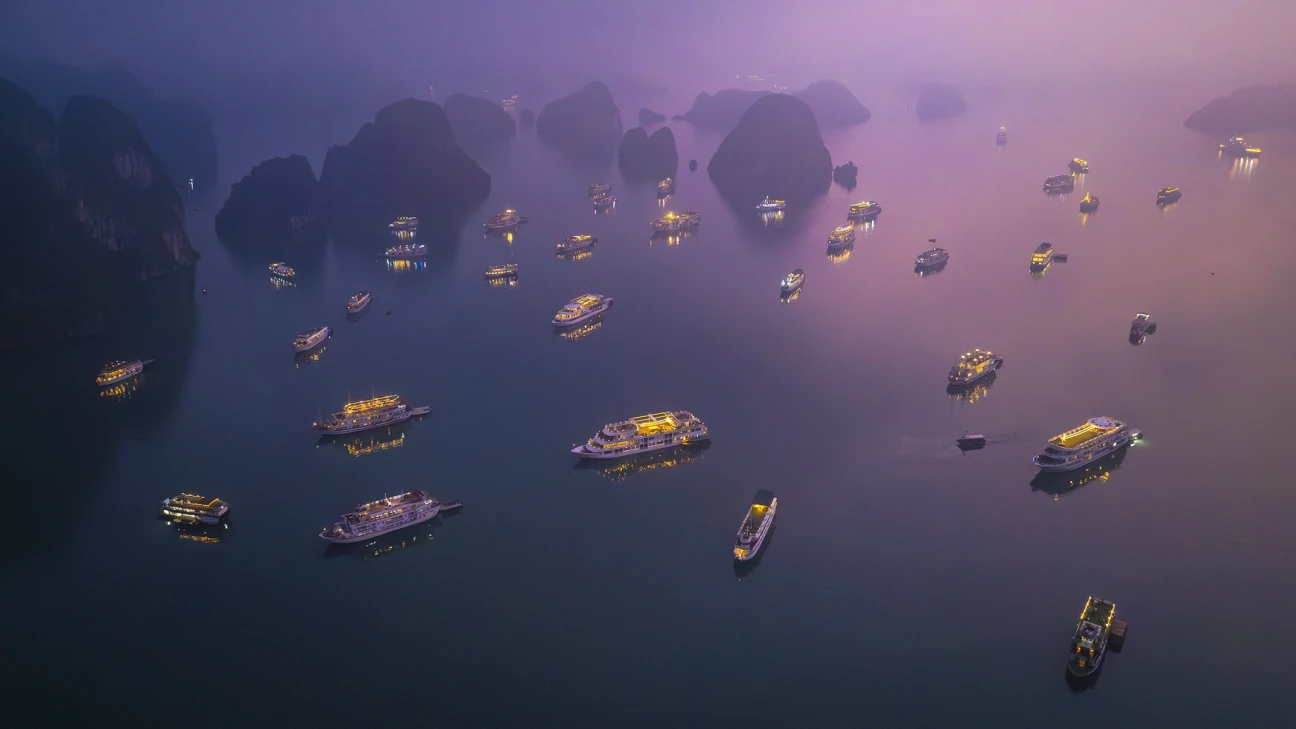
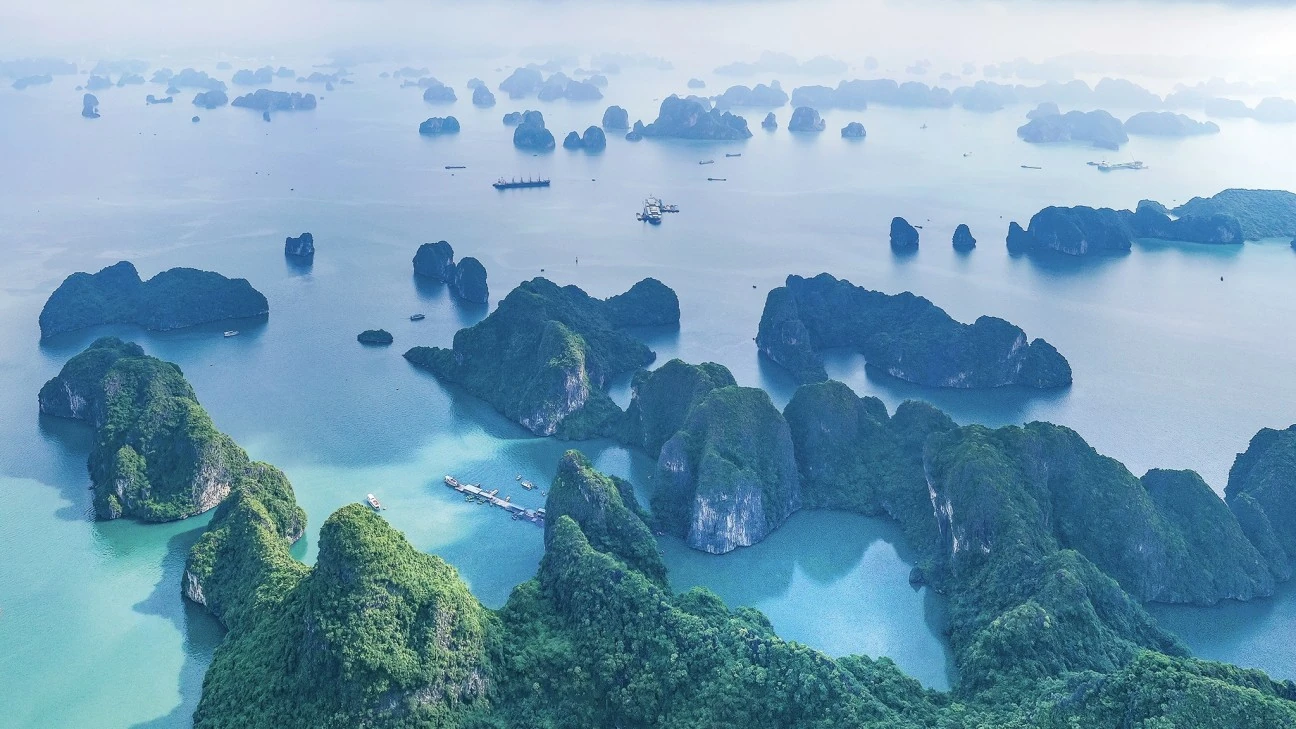
Drone photography has revolutionized how we see Ha Long Bay. From above, the true scale and beauty of the karst landscape become breathtakingly apparent. Experiment with different altitudes and angles to showcase the patterns of the water, the arrangement of the islands, and the vastness of the seascape. Viet's suggestion for drone work is to always prioritize safety and respect for local regulations and privacy. He also recommends looking for dynamic compositions that highlight the interplay of light and shadow on the water and the karst formations. Capturing the bay from this elevated perspective offers compositions that are simply impossible from sea level, revealing the intricate maze of waterways and islets in their full glory.
Nightscape Photography in Ha Long
Ha Long Bay transforms after dark, offering unique challenges and rewards for nightscape photographers. Away from major light pollution, the night sky can be surprisingly clear, providing a celestial backdrop to the illuminated karsts.
Capturing the Stars Over Ha Long Bay
Photographing the Milky Way above Ha Long Bay requires a clear night, minimal moonlight, and a lens with a wide aperture (f/2.8 or wider is ideal). Use a sturdy tripod to ensure sharp images during long exposures, typically ranging from 15 to 30 seconds. Set your camera to manual mode, with an ISO between 1600 and 6400, depending on your camera's capabilities and the darkness of the sky. Focus to infinity manually. The silhouette of the karsts against the star-filled sky creates a dramatic and otherworldly scene. Experienced photographers in Vietnam suggest scouting locations during the day to identify interesting compositions that will work well with the night sky. Sometimes, the glow of a distant fishing boat can add a point of interest to an otherwise dark seascape.
Long Exposure Techniques for Water and Light
Beyond the stars, long exposures can be used to smooth out the water, creating a serene, almost misty effect around the karsts. This is particularly effective during twilight or even on moonlit nights. Using a low ISO and a neutral density (ND) filter can allow for exposures lasting several minutes, transforming the choppy waters into a tranquil expanse. This technique, when combined with the dramatic silhouettes of the karsts, can produce incredibly atmospheric and artistic images. Tran Tuan Viet often stresses that it’s the feeling a photograph evokes that truly matters, and long exposures can certainly add a profound sense of peace and wonder to images of Ha Long Bay.
Technical Considerations and Practical Advice
Regardless of the genre, preparation is key. Always carry spare batteries, especially for drone operations, and ensure your gear is protected from the humidity and potential sea spray. Investing in weather-sealed equipment is a wise choice for photographing in Vietnam's coastal regions.
Camera Settings and Gear for Ha Long Bay
A versatile zoom lens (e.g., 24-70mm) is excellent for landscapes and travel shots, while a wide-angle (e.g., 16-35mm) is ideal for capturing the grand scale. For nightscapes, a fast wide-angle lens is crucial. A drone can offer incredible aerial views, but check local regulations before flying. For all genres, a sturdy tripod is a critical piece of equipment. When shooting in bright conditions, consider using a circular polarising filter to reduce glare and enhance saturation. Understanding your camera's metering modes and learning to shoot in RAW format will give you the most flexibility in post-processing to recover details and correct white balance. Viet recommends experimenting with different shooting modes to fully understand how your camera responds to the unique light conditions of Ha Long Bay.
Ready to capture the full potential of Ha Long Bay? Join our Vietnam Photo Tours to experience this location with expert guidance and master your photography.