Green Moss
Discover Green Moss Photography in Binh Thuan, Vietnam: A photographer's guide to composition, light, and visual storytelling in this unique landscape.
Binh Thuan: Capturing the Lush Green Moss
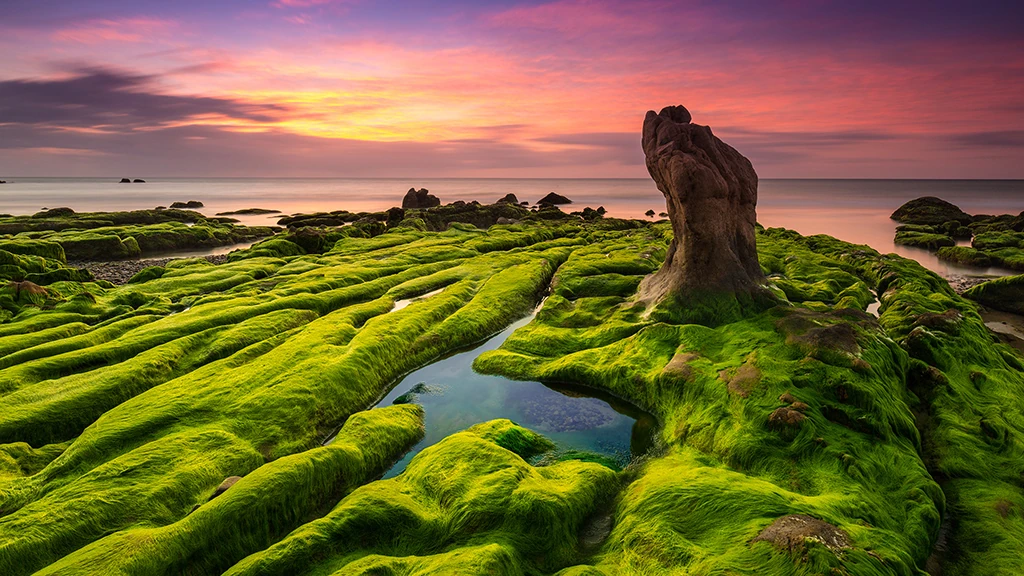
The Binh Thuan province, often celebrated for its arid landscapes and dramatic coastlines, holds a surprisingly lush secret: the ephemeral beauty of Green Moss. Far from the typical images conjured by the region's name, these pockets of vibrant green offer a unique photographic challenge and reward. The best time to witness and photograph this phenomenon is during the cooler, less arid months of January and February. This period provides the ideal conditions where moisture lingers, allowing delicate mosses to flourish in shaded, damp areas, creating a stark and beautiful contrast against the often-sun-baked surroundings.
For landscape and travel photographers, Green Moss in Binh Thuan presents an opportunity to explore a softer, more intimate side of Vietnam. It requires a shift in perspective, moving away from grand vistas to focus on intricate details and subtle textures. Understanding the specific light conditions is paramount. While harsh midday sun can wash out the delicate colours and render the mosses almost invisible, the softer light of early morning or late afternoon can bring out its rich emerald hues. During these periods, the light tends to be more diffused, wrapping around the mossy surfaces and revealing their three-dimensional quality.
Binh Thuan: Photography Techniques for Green Moss
When approaching Green Moss, consider your lens choice. A macro lens or a lens with a good close-focusing capability is invaluable for isolating the intricate patterns and textures of the moss. Look for areas where the moss has colonized rocks, fallen logs, or the bases of trees, creating miniature ecosystems. The interplay of light and shadow on these surfaces can be incredibly dramatic. Experiment with shooting angles; getting low to the ground can often reveal a world unseen from a standing position, emphasizing the scale of the moss against its substrate.
Compositionally, the key is to find balance and focus. The vibrant green of the moss can be overwhelming, so look for elements that provide contrast or lead the viewer's eye. This could be a stark rock formation breaking through the moss, the gnarled roots of a tree, or even a single, dew-kissed leaf. Experienced photographers in Vietnam often emphasize the importance of negative space to allow the subject to breathe. In the context of Green Moss, this might mean framing a patch of moss with darker, less detailed areas of the background or a simple, uncluttered rock face.
Utilizing Light for Maximum Impact
The most critical element for photographing Green Moss effectively is light. During January and February, while Binh Thuan can still be sunny, mornings often bring a gentle fog or mist, especially in sheltered valleys or near water sources. This diffused light is photographic gold. It softens shadows, reduces contrast, and imbues the scene with an almost ethereal quality. If you are fortunate enough to capture the moss under such conditions, you'll find the colours become intensely saturated without being harsh. Tran Tuan Viet, a renowned Vietnamese photographer, often talks about the importance of seeking out these "magic hours" for their unique atmospheric qualities. Viet recommends using a polarizing filter during brighter conditions to cut through any glare and deepen the greens, making them pop even more vibrantly.
If shooting in slightly brighter conditions, bracketing your exposures is a wise strategy. Mossy areas, especially when growing on dark, damp surfaces, can present a narrow dynamic range challenge. Your camera might struggle to capture detail in both the bright highlights of the moss and the deep shadows. By taking multiple shots at different exposures, you can later combine them in post-processing to create a more balanced and detailed image. This technique is particularly useful when the moss is growing on uneven textures, where the play of light and shadow creates extreme contrasts.
Binh Thuan: Travel Photography Considerations
As a travel photographer, integrating the discovery of Green Moss into your itinerary in Binh Thuan requires a bit of local knowledge and flexibility. These micro-habitats are often found in less accessible spots, sometimes requiring short hikes off the beaten path. This is where the expertise of a local guide becomes invaluable. Vietnam Photo Tours specializes in uncovering these hidden gems, ensuring you spend less time searching and more time shooting. Their guides understand the local environment and can lead you to the most picturesque locations at the optimal times.
When travelling to Binh Thuan in January or February specifically for this subject, pack accordingly. While it’s generally dry, the areas where moss thrives will be damp. Waterproof footwear and clothing are advisable. For your camera gear, consider a weather-sealed body and lenses if possible. Even if the weather is clear, the damp environment can pose risks. Tran Tuan Viet emphasizes that being prepared for Vietnam's diverse microclimates is a critical element of successful photography. He suggests always carrying a lens cloth and a small blower to quickly clear away any moisture or dust that might settle on your equipment.
Compositional Strategies and Storytelling
Beyond mere aesthetics, the Green Moss scenes offer a chance to tell a story about resilience and nature’s persistent beauty. When composing your shots, think about what narrative you want to convey. Is it the quiet struggle of life in a challenging environment? Or the vibrant explosion of colour that appears when conditions are just right? A wide-angle lens can be used to showcase the moss as part of a larger, perhaps more arid, landscape, highlighting the contrast. Conversely, a telephoto lens can compress the scene, isolating a particularly dense patch of moss and making it appear even more prominent.
Remember to observe your surroundings for natural frames. Overhanging branches, rock formations, or even other plants can be used to frame your subject, adding depth and context. Viet’s advice for landscape photography often centers on finding a strong foreground element, and this applies perfectly here. A patch of moss leading into the frame can draw the viewer in, inviting them to explore the scene. Look for leading lines within the moss itself – the way it grows or clings to a surface can create organic lines that guide the eye through the image.
The experience of finding and photographing Green Moss in Binh Thuan is a testament to the unexpected visual treasures Vietnam holds. It’s a reminder that sometimes the most captivating subjects are not the grandest but the most detailed and subtle. By understanding the seasonal windows, the specific lighting conditions, and employing careful compositional techniques, photographers can capture truly unique and compelling images.
Ready to capture the full potential of Green Moss? Join our Vietnam Photo Tours to experience this location with expert guidance and master your photography.
More Scenes

Boat Harbor

Chams People

Coracle Fishermen
Drying Fish
Similar Photography Genre

Reflection Cave