Da Dia Reef
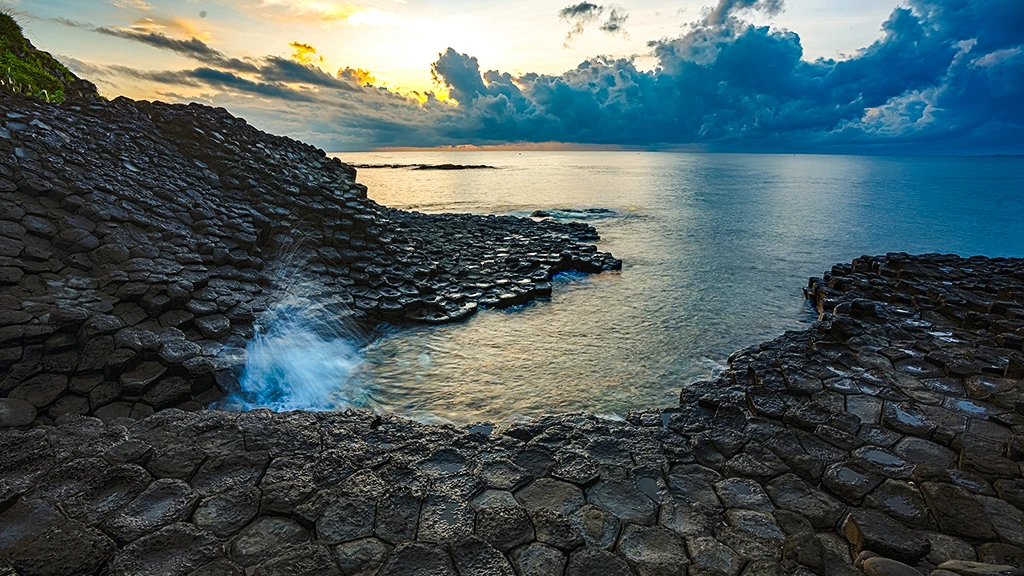
Vietnam's Da Dia Reef: volcanic rock formations bathed in golden hour light offer stunning seascape photography. Capture unique textures and powerful waves.
Mastering the Hexagonal Columns of Da Dia Reef
Vietnam offers a kaleidoscope of photographic opportunities, and among its most striking natural wonders is Da Dia Reef in Phu Yen. This geological marvel, often referred to as the "Ceramic Road" by locals due to its resemblance to ancient pottery, presents a unique challenge and reward for photographers. Composed of thousands of interlocking hexagonal basalt columns, the reef's stark, geometric beauty, juxtaposed against the dynamic ocean, creates scenes that demand careful consideration of light, composition, and timing. The year-round accessibility of Da Dia Reef means that photographers can explore its dramatic landscape in any season, though each period offers distinct atmospheric qualities. For landscape and travel photographers, this location is an absolute must-visit, promising images that are both powerful and profoundly evocative of Vietnam's raw natural power.
Compositional Strategies for Da Dia Reef
Capturing the essence of Da Dia Reef requires more than just pointing a camera; it demands a strategic approach to composition. The sheer scale and the repetitive, yet irregular, patterns of the hexagonal columns can be overwhelming. A key technique is to use leading lines formed by the natural pathways of the basalt. These lines can draw the viewer's eye through the frame, guiding them towards the crashing waves or the vast ocean horizon. Experienced photographers in Vietnam often suggest looking for the interplay between the man-made and the natural. While Da Dia Reef is entirely natural, its geometric precision can sometimes feel almost architectural. Consider framing shots that emphasize this duality, perhaps by including a fisherman with his conical hat in the foreground, or a small, rustic boat navigating the waters. Tran Tuan Viet, a renowned Vietnamese landscape photographer, frequently emphasizes the importance of scale and perspective in his workshops. He recommends using a wide-angle lens to exaggerate the grandeur of the reef and the surrounding seascape, while also keeping an eye out for smaller details within the columns that can add narrative depth to your images. Including elements like tenacious coastal plants clinging to the rocks can introduce a sense of resilience and life amidst the stone.
When composing, think about the rule of thirds, but also be prepared to break it to highlight the symmetry or asymmetry of the formations. Sometimes, placing a prominent column directly in the center can create a powerful, almost abstract focal point. Another approach is to incorporate negative space, allowing the vastness of the sky or the sea to balance the intricate details of the reef. The texture of the basalt is incredibly rich, and photographers should aim to capture this through careful attention to focus and detail. Utilizing foreground interest is also paramount; look for tide pools reflecting the sky, or the spray of the waves creating ephemeral patterns on the rocks.
Capturing Movement: Waves and Water at Da Dia Reef
The ocean is an active participant at Da Dia Reef, and its movement is a critical element in creating dynamic landscape photographs. The way the waves interact with the hexagonal columns defines the character of the scene. For capturing the power of the surf, a long exposure is often the go-to technique. By using a neutral density (ND) filter and a slow shutter speed, you can transform the turbulent water into silky smooth streaks, creating a beautiful contrast with the static, textured rocks. This technique works exceptionally well during the brighter parts of the day, as the ND filter allows you to achieve the desired shutter speeds without overexposing the image. According to Viet's experience shooting this scene, the key to a successful long exposure is not just smoothness, but also capturing the interaction points where the water meets the rock. Look for areas where the waves are actively crashing and churning, creating visual interest.
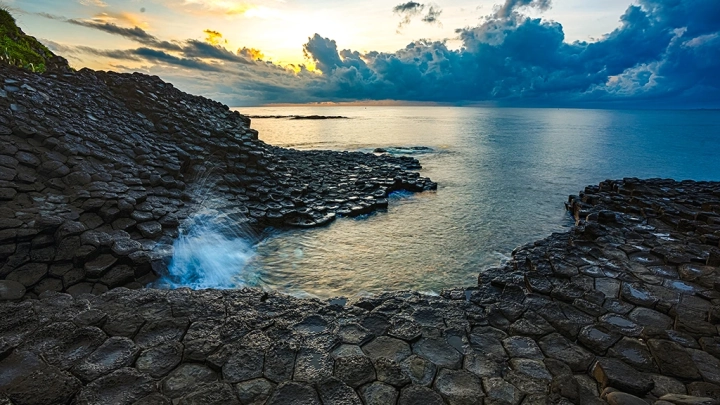
Alternatively, for a more dramatic and impactful shot, try capturing the moment of peak action. This requires faster shutter speeds to freeze the spray and the force of the waves. These images can convey a raw, untamed energy. Experiment with different shutter speeds to find the sweet spot between freezing the action and allowing for some motion blur that still conveys movement. When shooting at sea level, always be mindful of water safety and protect your gear from salt spray and rogue waves. Keeping a microfiber cloth handy is essential for maintaining clear lens elements.
Lighting and Atmospheric Conditions
The lighting at Da Dia Reef plays a crucial role in defining its mood and visual impact. As with most coastal landscapes, the golden hour – the period shortly after sunrise and before sunset – offers the most flattering light. The warm, soft hues of the rising and setting sun can bathe the basalt columns in a magical glow, enhancing their textures and colors. This is also when the skies are often most dramatic, with vibrant reds, oranges, and pinks adding a stunning backdrop. However, Da Dia Reef is also captivating under other lighting conditions. Midday sun, while often harsh and creating a narrow dynamic range, can be used creatively to emphasize the stark, geometric forms of the reef, creating strong contrasts and shadows. This is where careful exposure control and understanding your camera's capabilities become essential.
Tran Tuan Viet recommends using the midday sun to highlight the sharp edges and textures of the basalt, suggesting that photographers should focus on compositions that leverage these strong shadows. He also points out that during the monsoon season, the dramatic, cloudy skies can provide a diffused, even light that is perfect for long exposures, softening the harshness of the rock and creating a more ethereal mood. Photographers visiting during this time should embrace the atmospheric conditions, as they can lead to truly unique images. Fog or mist, though less common, can also add an incredible sense of mystery and depth to the scene. The year-round aspect of Da Dia Reef means being prepared for a variety of weather, which is part of its charm and photographic potential.
Lens Selection and Camera Settings for Da Dia Reef
Choosing the right lens can significantly impact how you portray Da Dia Reef. A wide-angle lens (e.g., 16-35mm) is invaluable for capturing the sweeping vistas and emphasizing the vastness of the ocean and the expanse of the reef. It allows you to get close to the formations and include foreground elements prominently, creating a sense of immersion. For more intimate shots that focus on the intricate patterns of the hexagonal columns or specific textures, a mid-range zoom lens (e.g., 24-70mm) or even a macro lens can be very useful. These lenses enable you to isolate details and highlight the complex geometry. Experienced photographers in Vietnam suggest that while a versatile zoom is great, sometimes carrying a prime lens, like a 35mm or 50mm, can encourage more deliberate composition and yield sharper results.
Regarding camera settings, aperture control is key. For landscapes where you want everything from the foreground to the background in sharp focus, use a narrower aperture like f/8 to f/16. This ensures a good depth of field. When employing long exposures for water, you'll be using a wider aperture to facilitate the slow shutter speed, but depth of field might become a secondary concern to capturing the motion. ISO should ideally be kept as low as possible (e.g., ISO 100 or 200) to minimize noise, especially in landscape shots where detail is paramount. However, in lower light conditions or when trying to achieve faster shutter speeds for wave action, don't be afraid to increase ISO judiciously. Shooting in RAW format is highly recommended, as it provides the maximum flexibility for post-processing, allowing you to recover details in highlights and shadows, which is particularly useful given the often challenging lighting conditions at the coast. Understanding metering modes – evaluative (or matrix) metering is usually a good starting point, but you might need to switch to spot metering for tricky backlit scenes or to ensure the important areas of the reef are correctly exposed.
Ready to capture the full potential of Da Dia Reef? Join our Vietnam Photo Tours to experience this location with expert guidance and master your photography. Our tours are designed to help you discover the best light, angles, and techniques to bring home truly stunning images from Vietnam's captivating landscapes.
More Scenes
Boat Harbor
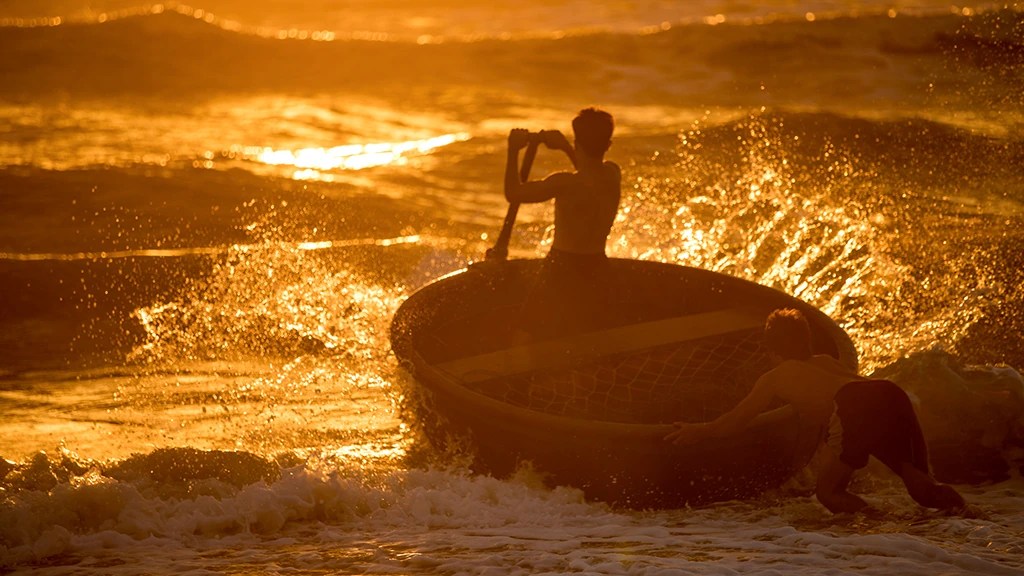
Coracle Fishermen

Coracle Making
Similar Photography Genre
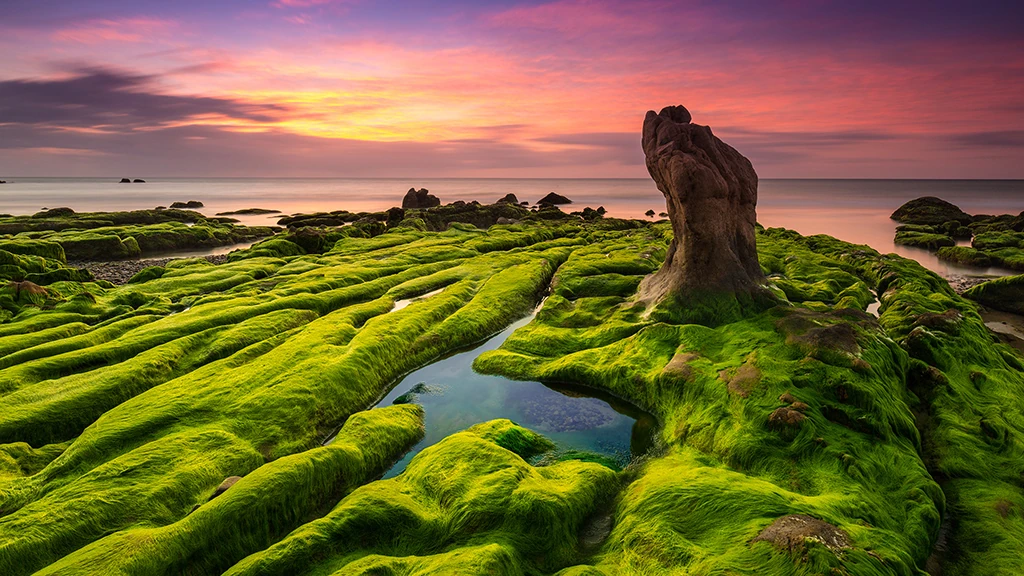
Green Moss