Cave Fishing
Capture Cave Fishing in Vietnam: light, compositions, and a glimpse into Vietnamese tradition. Ideal for photographers seeking cultural immersion.
Cave Fishing: Capturing Timeless Vietnam
As the founder of Vietnam Photo Tours and a lifelong resident, I've spent countless hours with my camera exploring the hidden corners of this magnificent country. Among my most cherished locations for photography is the unique phenomenon of Cave Fishing. It’s a scene that encapsulates so much of Vietnam’s spirit: resilience, tradition, and a profound connection to nature. This isn't just about taking a photograph; it's about telling a story, and the Cave Fishing locations offer a compelling narrative for both portrait and travel photographers.
The concept of fishing within caves, often accessible only by boat or through narrow passages, presents a photographic challenge and a reward unlike any other. The light is always dramatic, the subjects are often stoic and weathered, and the environment itself is a character in every frame. It's a place where time seems to slow down, allowing us to capture authentic moments that speak volumes about the lives lived here. Whether it's the focused gaze of a fisherman casting his net in the dim cavern light or the majestic sweep of rock formations illuminated by a single shaft of sunlight, Cave Fishing demands our attention and offers unparalleled visual richness. For photographers keen to delve into the soul of Vietnam, this is an essential experience.
Cave Fishing: Mastering the Dramatic Light
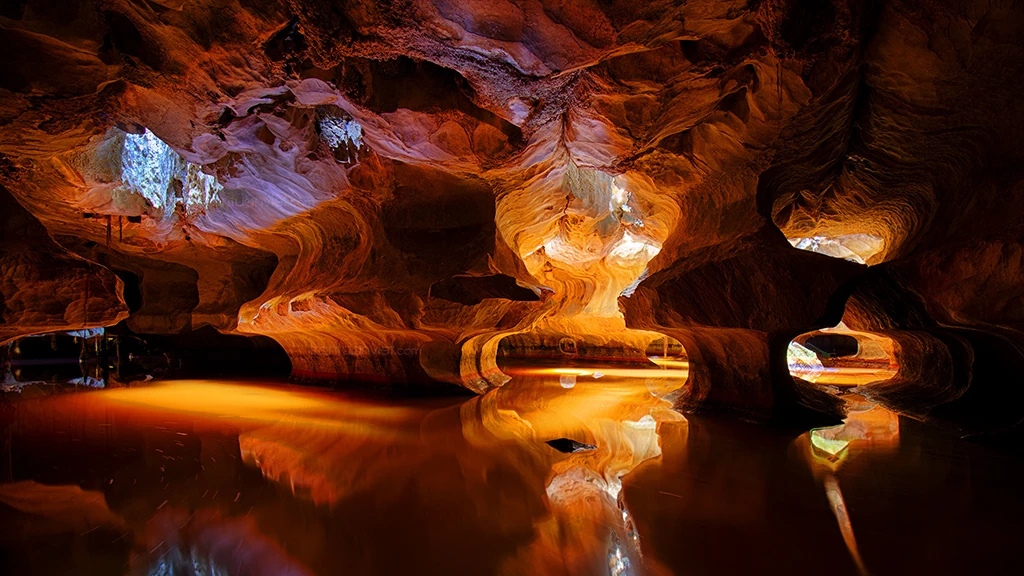
One of the most significant photographic considerations at Cave Fishing sites is the light. This environment is characterized by extreme contrasts. You have the deep, inky blackness of the cave interior juxtaposed with potentially brilliant shafts of sunlight piercing through openings or the ever-present glow from lanterns and boat lights. This presents a dynamic range challenge that will test your camera's capabilities and your understanding of exposure. My approach often involves embracing this contrast rather than fighting it.
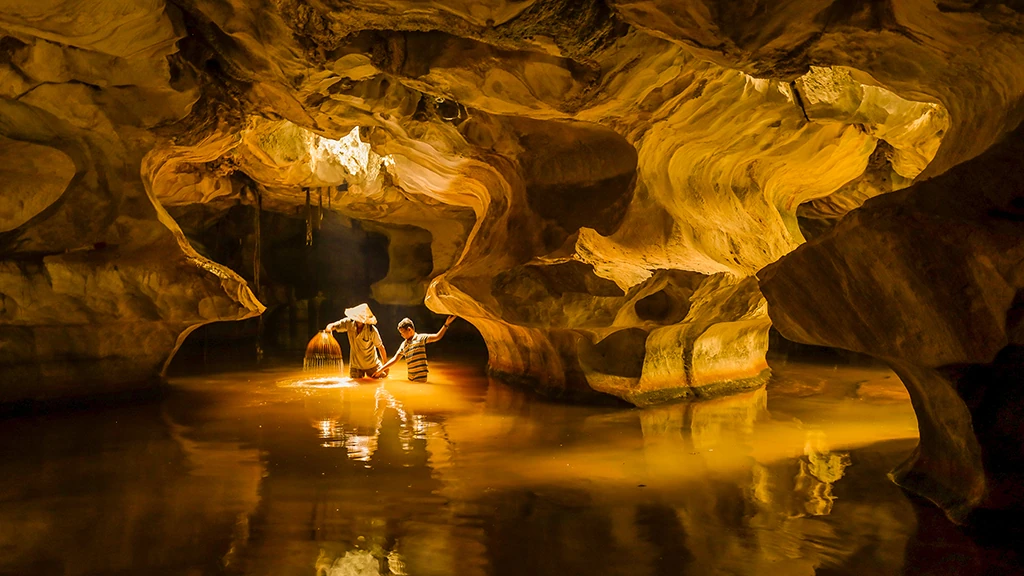
When photographing the fishermen themselves, I look for opportunities where the available light sculpts their features. Often, a single light source, be it from an opening in the cave or a boat's lamp, will create a dramatic chiaroscuro effect, highlighting the textures of their skin and the determination in their eyes. This is where the portrait genre truly shines in this setting. I often recommend a slightly underexposed shot, leaning into the shadows, to maintain that mood and atmosphere. Relying on post-processing to lift shadows carefully can reveal detail without sacrificing the inherent drama.
Utilizing Natural Light and Lanterns
The ambient light within the caves is typically very low. If you're lucky, you might find a cave with a large opening that allows significant natural light to penetrate. In these instances, a tripod becomes your best friend, allowing for longer exposures to capture the scene without resorting to high ISO values that can introduce noise. However, more often than not, the light sources are artificial. Fishermen use lanterns, headlamps, or small battery-powered lights. These can be incredibly effective for adding a warm, intimate glow to your portraits. When using these artificial lights, consider their color temperature. They often emit a warm, yellowish light, which can be beautiful when it illuminates the subject's face, but it can also create color casts that need careful management in editing.
My personal trick here is to look for the interplay between the cave's natural dimness and the sharp, directional light from a lantern. I try to position myself so that the lantern light falls directly onto the fisherman’s face, creating a strong, graphic quality. If shooting portraits, I encourage my clients on Vietnam Photo Tours to let the fishermen continue their work; often, their natural movements and their focus on the task at hand produce the most compelling expressions. Sometimes, I’ll ask them to hold their lantern slightly off to the side, creating that beautiful Rembrandt lighting effect. It’s about observing the light and using it to tell the story of their labor.
Cave Fishing: Composition and Perspective
The environment of Cave Fishing offers unique compositional possibilities. The confined spaces, the textures of the rock walls, and the reflections on the water all contribute to a rich visual tapestry. When it comes to travel photography, I’m always looking for ways to convey the scale and the atmosphere of the location. This often means using a wide-angle lens to take in the grandeur of the cave itself, with the fishing activity as a smaller, yet vital, element within the frame.
Embracing Verticality and Framing
Many of these cave systems have impressive vertical dimensions. Look for opportunities to emphasize this. Shooting upwards, capturing the stalactites and the distant opening, can add a sense of awe. Conversely, shooting from a slightly elevated position can provide a broader view of the fishing operations and the landscape within the cave. Don't be afraid to use the natural cave formations to frame your subject. An archway, a protruding rock, or even the silhouette of a boat can act as a natural vignette, drawing the viewer's eye directly to the fisherman or the action.
Another technique I often employ is to get low. By placing my camera near the water level, I can capture the reflections of the fishermen and their boats, adding a layer of visual interest and symmetry to the image. The water’s surface, even in a cave, can be surprisingly still, creating mirror-like effects that are incredibly photogenic. This perspective also emphasizes the intimate relationship the fishermen have with their watery domain. For portraits, consider the rule of thirds, but also don't be afraid to break it to capture a more dynamic or centered composition if the light and subject warrant it. I often find that capturing the fisherman looking into the frame, rather than out of it, can create a sense of anticipation and mystery. It invites the viewer to wonder what they are seeing or waiting for.
Cave Fishing: Technical Considerations and Personal Tricks
Photographing in a cave environment requires careful attention to your camera settings. As I mentioned, the low light conditions are paramount. My general recommendation is to start with the lowest ISO possible to maintain image quality. If you’re using a tripod, you can afford much longer shutter speeds. However, if you are shooting handheld, you’ll likely need to increase your ISO. My personal trick is to determine the acceptable level of noise for my specific camera and workflow. Many modern cameras can handle surprisingly high ISOs with acceptable noise reduction in post-processing.
Focusing in the Dark
Achieving sharp focus can be a challenge in dimly lit caves. Autofocus systems can struggle to lock onto subjects in such low light. My go-to method is to use manual focus. I’ll often pre-focus on a known distance or use the focus peaking feature on my camera if available. Another effective technique is to use the brightest point of light in the scene as an autofocus point, then recompose. If photographing a fisherman with a lantern, I’ll often focus on the illuminated part of their face or hand. For travel shots where the fisherman is a smaller element, I’ll aim for hyperfocal distance to maximize depth of field, ensuring both the environment and the subject are acceptably sharp.
When it comes to exposure, I often shoot in RAW format. This gives me the maximum flexibility in post-processing to recover shadow detail and control highlights. A common issue is the narrow dynamic range of the scene, where the bright lantern light is blown out while the surrounding cave is almost black. Graduated neutral density filters, if you're using a larger camera system, can be helpful, but I often find careful exposure bracketing and blending in software to be more practical for travel photography. Another of my personal tricks is to utilize the flash creatively. Not as a direct, harsh light, but bounced off the cave ceiling or walls, or used as a fill light at a very low power setting to subtly lift the shadows. This can add a touch more clarity to the scene without looking artificial. It’s about adding just enough detail to make the scene pop. Tran Tuan Viet’s experience has taught me that adaptability is key; always be ready to change your approach based on the light and the mood of the moment.
The beauty of Cave Fishing in Vietnam is that it's a year-round spectacle. The dramatic lighting and the timeless activity of fishing are present regardless of the season. While the weather might change, the core photographic opportunities remain. This is what makes it such a consistently rewarding location for photographers. Whether you are drawn to the stoic portraits of the fishermen, the grand travel vistas of the cave interiors, or the subtle interplay of light and shadow, Cave Fishing offers a profound photographic journey into the heart of Vietnam. Viet believes that understanding these subtle nuances will elevate your images from simple snapshots to evocative stories.
Ready to capture the full potential of Cave Fishing? Join our Vietnam Photo Tours for a guided photography experience designed to master this location and many others across Vietnam.
More Scenes