Ba Den Mountain
Capture stunning Vietnam photography at Ba Den Mountain. Explore dramatic landscapes, spiritual sites, and golden hour light for unforgettable shots.
Ba Den Mountain: Capturing Vietnam's Spiritual Summit
Greetings fellow photographers! Tran Tuan Viet here, and for years, my passion has been guiding artists through the breathtaking landscapes of Vietnam. Today, I want to share some insights into photographing Ba Den Mountain, a truly iconic Vietnamese landmark that offers a unique blend of natural grandeur and spiritual resonance. This isn't just a mountain; it's a sacred site, a place where light, mist, and human devotion converge, creating unparalleled photographic opportunities. Ba Den Mountain is accessible and photographable throughout the year, from the dry coolness of January and February to the lush vibrancy of the rainy season from May to October, and back into the pleasant autumn months. Each season offers a distinct palette and atmospheric quality, making it a year-round destination for the dedicated landscape photographer.
Ba Den Mountain: Essential Photography Techniques
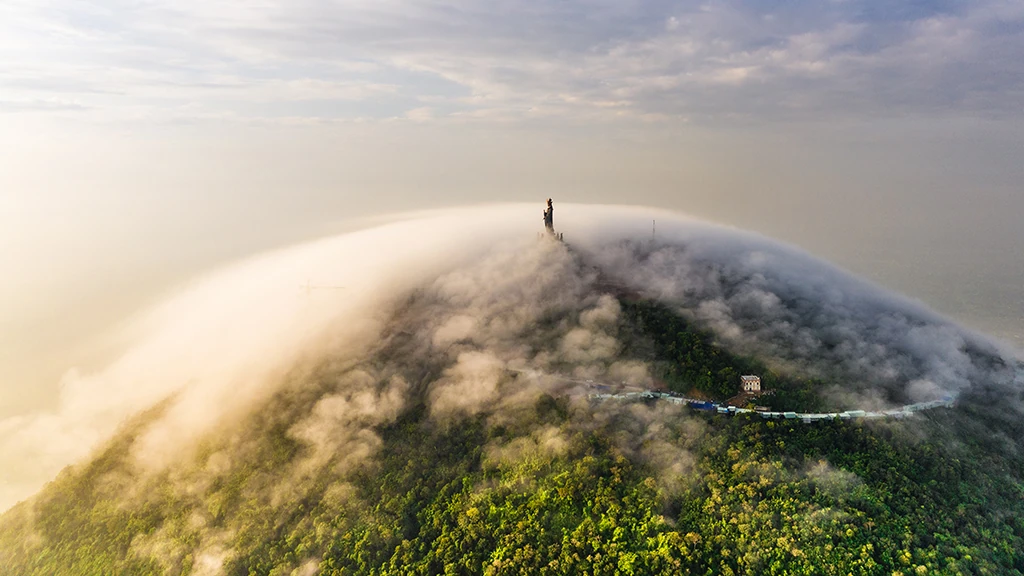
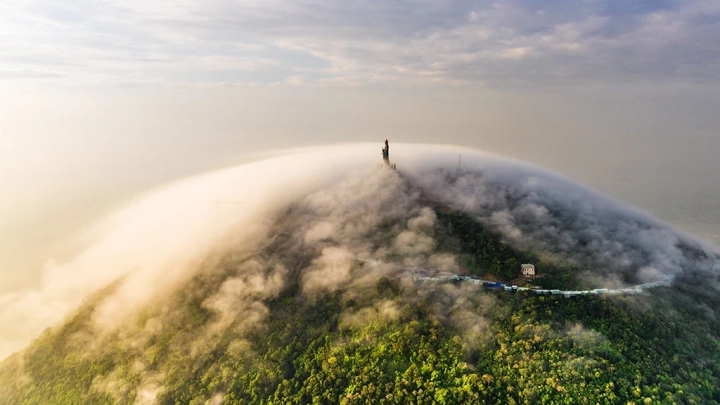
When approaching Ba Den Mountain, the first thing I impress upon my participants at Vietnam Photo Tours is the importance of understanding light. While the entire year offers photographic potential, the months of January, February, and March often provide the clearest skies and crispest air, ideal for revealing the mountain's dramatic contours. However, don't discount the monsoon months. The diffused light and persistent mist during the rainy season (roughly May to October) can lend an ethereal, almost mystical quality to your shots. My personal trick here is to embrace the fog. Instead of seeing it as a hindrance, view it as a natural diffuser. Use it to simplify your compositions, isolate key elements, and create a sense of depth and mystery. A fast lens with a wide aperture can also be incredibly useful for isolating subjects within the mist, creating a dreamy bokeh effect that enhances the spiritual atmosphere.
Compositionally, Ba Den Mountain presents several challenges and opportunities. The sheer scale of the mountain requires careful consideration of perspective. When shooting from below, a wide-angle lens is your best friend for capturing its imposing presence. However, don't forget the power of telephoto lenses for isolating architectural details of the temples and pagodas that dot its slopes, or for compressing the landscape to emphasize its grandeur. I often find that looking for leading lines – be it pathways, temple staircases, or even natural rock formations – can guide the viewer's eye towards the summit or points of interest. My personal technique involves actively seeking out these lines, sometimes even waiting for the right moment when a monk or devotee walks along a path, adding a human element and scale to the immense landscape. This elevates a simple landscape into a narrative.
Maximizing the Golden and Blue Hours at Ba Den Mountain
The golden hour, both at sunrise and sunset, is a photographer's dream at Ba Den Mountain. The warm, directional light can sculpt the mountain's features, casting long shadows and bathing the landscape in a rich, painterly glow. Arrive at your chosen vantage point well before sunrise or stay long after sunset to capture the transition. This is where meticulous planning and local knowledge, which I strive to impart through Vietnam Photo Tours LLC, become invaluable. Knowing the best viewpoints, often discovered through years of exploration, is key. For instance, certain spots on the lower slopes offer unobstructed views of the main peak as the sun ascends, while other vantage points reveal the sprawling complex of temples. During the golden hour, I often bracket my exposures to capture the full dynamic range of the scene, especially when the sky is vibrant and the foreground is in shadow. This ensures I have the flexibility in post-processing to reveal detail in both the highlights and shadows.
The blue hour, that period of twilight after sunset or before sunrise, is equally magical, particularly during the drier months. The deepening blue sky provides a beautiful contrast to any artificial lights that may illuminate the temples. This is an excellent time for long exposures. Using a sturdy tripod is non-negotiable for these shots. Experiment with shutter speeds to smooth out any water features or to capture the movement of clouds. A remote shutter release or your camera's self-timer is also crucial to avoid camera shake. My insider tip for Ba Den Mountain during these transitional hours is to look for silhouettes. The silhouette of the large Buddha statue against a colorful sky can be a powerfully evocative image, capturing both the natural beauty and the spiritual essence of the location.
Ba Den Mountain: Embracing Specific Challenges and Opportunities
One of the unique aspects of Ba Den Mountain is the interplay between its natural beauty and the man-made structures. The numerous temples, pagodas, and statues, especially those illuminated at night, offer fantastic opportunities for low-light photography and even astrophotography during clear nights. However, be prepared for a narrow dynamic range when shooting scenes that combine bright artificial lights with dark, shadowy natural elements. High Dynamic Range (HDR) techniques, either in-camera or through post-processing, can be extremely beneficial here. Remember to focus on the spiritual narrative; it’s not just about capturing a pretty landscape but about conveying the feeling of the place. The interplay of light and shadow on the intricate carvings of the temples, or the soft glow of lanterns on a misty evening, are subjects demanding your attention.
For those who enjoy capturing details, the textures of the ancient stone, the vibrant colors of prayer flags, and the serene expressions on Buddha statues provide excellent close-up subjects. A macro lens or a telephoto lens used for close focusing can reveal these intricate details. Always be respectful of worshippers and their privacy; observe and photograph ethically. Sometimes, the best shots are those that tell a story of devotion and tradition. My personal philosophy when photographing sacred sites like Ba Den Mountain is to be patient and observant. Often, the most compelling moments are not staged but happen organically. A monk walking through a courtyard, sunlight filtering through ancient trees, or the condensation on a temple roof after a rain shower – these are the moments that truly define the experience. The camera settings I most often find myself using are aperture priority or manual mode, allowing me to control depth of field and exposure precisely, especially in challenging light conditions. I often shoot in RAW format to maximize post-processing flexibility, a practice that Tran Tuan Viet strongly advocates for all his students.
The climbing experience itself can also be a photographic journey. Whether you opt for the cable car or the trek, there are always unique perspectives to be found. The pathways winding through the jungle, the glimpses of the surrounding countryside through breaks in the foliage, and the changing light as you ascend all contribute to the visual narrative. During the rainy season, you might encounter vibrant green mosses clinging to rocks and trees, adding a lush, verdant feel to your images. Don't be afraid to experiment with different camera angles. Shooting from a low vantage point can make the mountain appear even more majestic, while a higher angle can reveal the intricate layout of the temple complexes. The presence of mist, common throughout the year but particularly prevalent during the wetter months, can be used to create dramatic, atmospheric shots. It acts as a natural veil, softening details and adding a sense of mystery, which is a critical element for creating compelling landscape images at Ba Den Mountain.
To truly master the art of capturing the essence of Ba Den Mountain and to benefit from hands-on guidance from an experienced local photographer, consider joining our Vietnam Photo Tours for a professionally guided expedition. Our tours are designed to immerse you in the beauty and culture of Vietnam, ensuring you leave with not just stunning photographs, but also unforgettable memories and a deeper understanding of photographic artistry.
Similar Photography Genre
Cha Forest
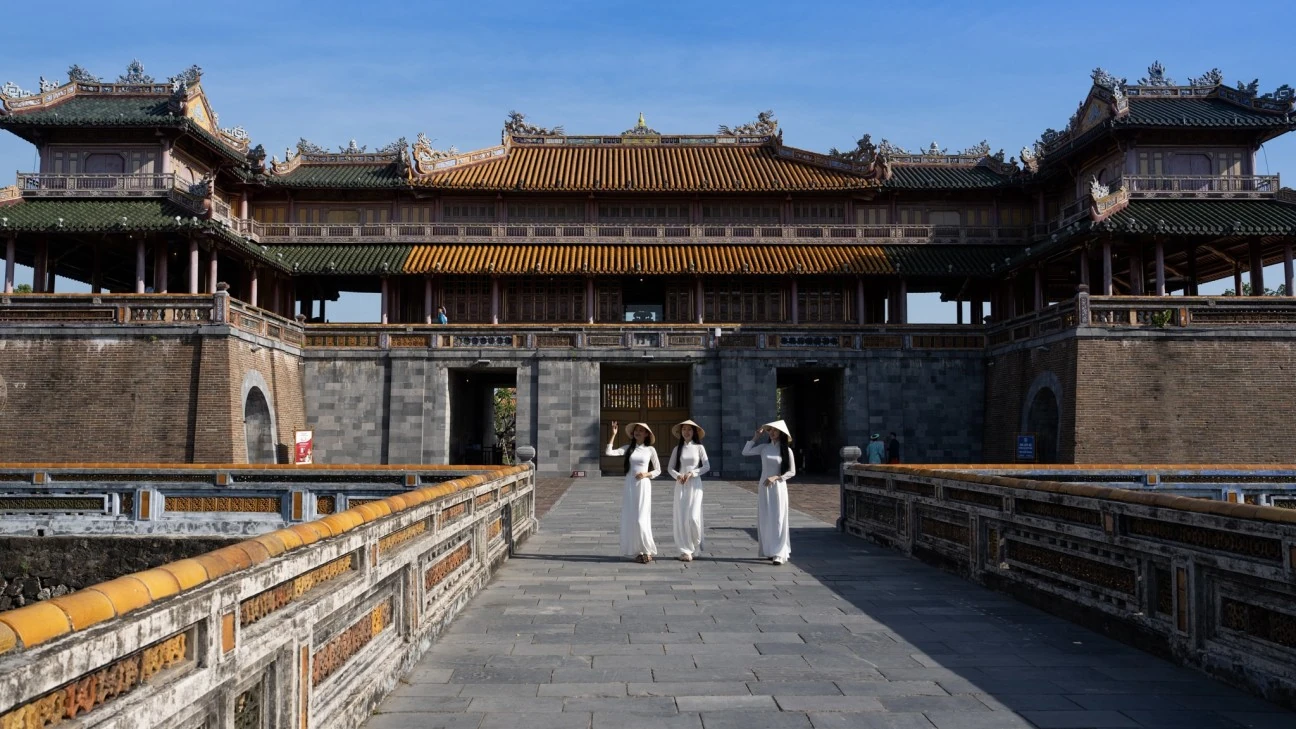
Imperial City