Ao Dai Model
Capture the elegance of the Ao Dai Model in Vietnam. Explore stunning composition & light, perfect for photographers seeking iconic Vietnamese portraiture.
Ao Dai Model: Capturing Vietnam's Timeless Elegance
I've spent countless hours immersed in the visual tapestry of Vietnam, seeking out scenes that tell a story. One of the most enduring and iconic subjects is the Ao Dai, Vietnam's national dress, and photographing a model adorned in it presents a unique opportunity for portraiture that blends tradition with contemporary artistry. This guide delves into how to capture the profound beauty of the Ao Dai, whether in a bustling city street or a serene countryside setting.
The Ao Dai itself is a masterpiece of design – flowing, elegant, and deeply representative of Vietnamese culture. When photographing a model wearing it, your aim is to enhance this inherent grace, not overpower it. The fabric's texture, the silhouette of the garment, and the wearer's posture all become crucial elements. My years of experience have taught me that understanding the subtle nuances of light and setting is paramount to creating truly impactful Ao Dai portraits.
Ao Dai Model: Mastering Light and Composition
The best months to capture the Ao Dai are essentially all year round, given Vietnam's diverse climate. However, photographers will find the mild, less humid months of January through April particularly comfortable for outdoor shoots. The late dry season (September to December) also offers pleasant conditions, with softer light and a welcome break from the intense heat and humidity of the summer months.
When it comes to lighting, the golden hour is your most powerful ally. The soft, warm light just after sunrise and before sunset bathes the Ao Dai in a gentle glow, highlighting the fabric's sheen and creating a flattering, dreamy atmosphere. Avoid harsh midday sun, which can flatten the image and create unflattering shadows. If you must shoot during midday, seek out open shade or utilize diffusers to soften the light. For indoor shoots, leverage natural window light. Positioning your model near a window can provide beautiful, directional light that sculpts her features and the garment.
Compositional Techniques for Ao Dai Portraits
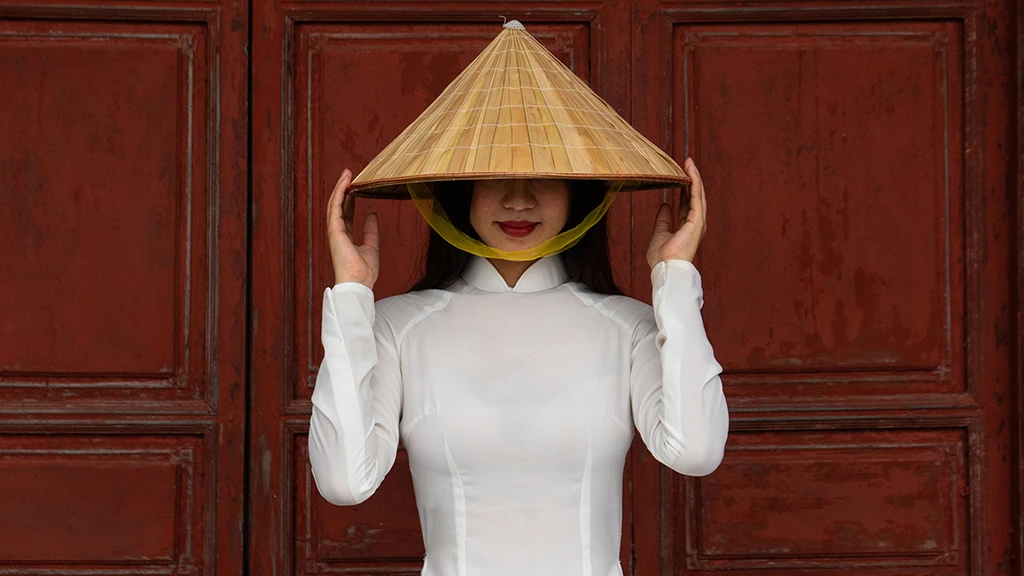
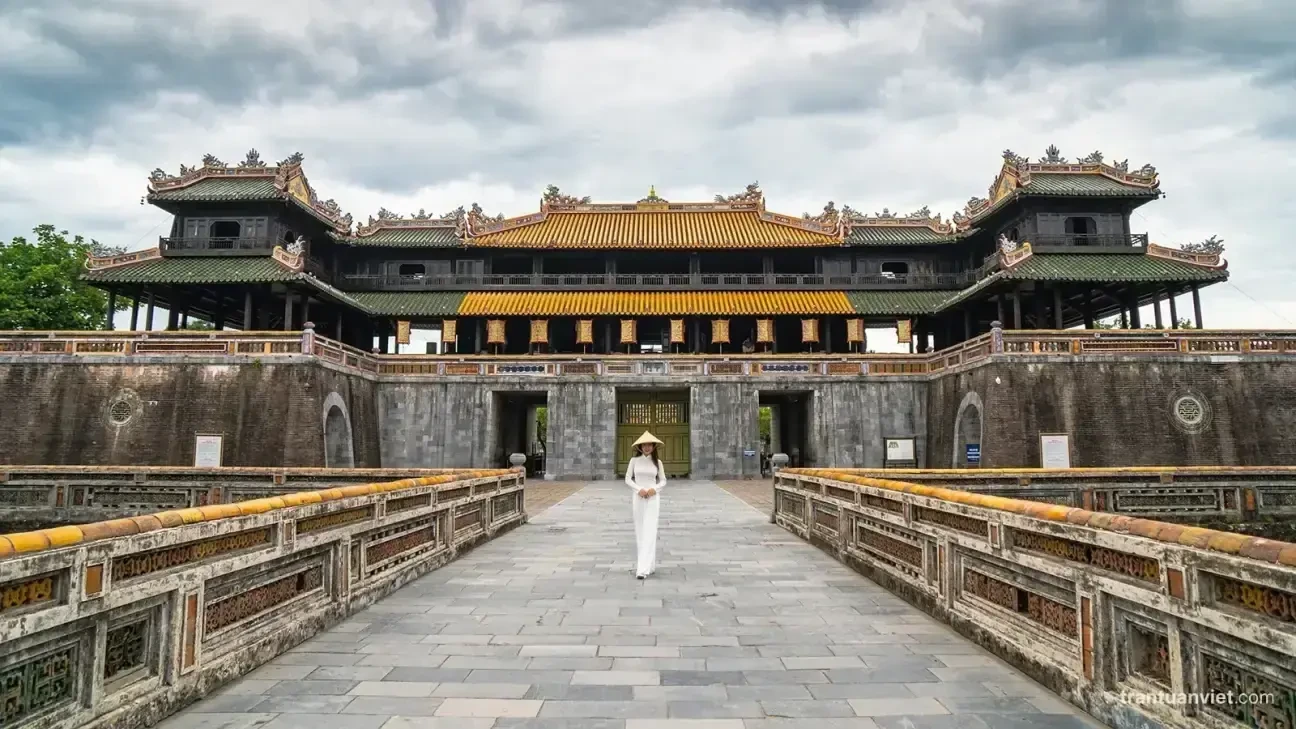
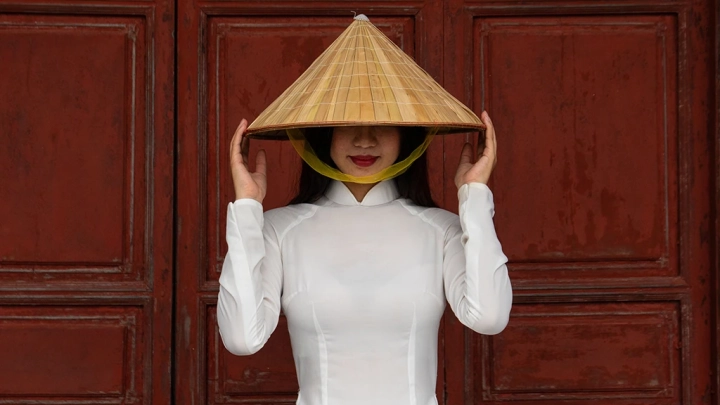
Compositionally, the Ao Dai lends itself beautifully to both full-body shots that showcase the entire outfit and tighter portraits that focus on the wearer's expression and the intricate details of the garment, such as the collar or the embroidery. I often employ a rule of thirds approach, placing the model slightly off-center to create visual interest and leading the viewer's eye through the frame. Consider using the surrounding environment as a framing element – perhaps an ancient doorway, a lush green bamboo grove, or the ornate architecture of a temple. This adds context and depth to your portrait.
My personal trick for Ao Dai portraits is to encourage movement. A gentle sway of the fabric as the model walks, or a subtle turn of the head, can inject life and dynamism into an otherwise static pose. Experiment with different camera angles; shooting from a slightly lower vantage point can enhance the model's stature and the Ao Dai's elegance, while a higher angle might offer a more intimate perspective. Don't be afraid to get creative with your lens choices. A prime lens, like a 50mm or 85mm, is excellent for portraits, providing beautiful bokeh that isolates the subject. For wider shots that incorporate more of the environment, a 35mm lens offers a good balance.
Ao Dai Model: Harnessing the Vietnamese Environment
The backdrop you choose significantly impacts the final image. Iconic Vietnamese locations like the lantern-lit streets of Hoi An, the imperial citadel in Hue, the lush rice paddies of the countryside, or even the vibrant chaos of a Hanoi street market can all serve as stunning backdrops. Each setting offers unique opportunities for color, texture, and storytelling.
Seasonal Considerations and Their Impact
While the Ao Dai is a year-round garment, seasonal variations in Vietnam's landscape can dramatically influence your photographs. During the spring (March-May), the country bursts with fresh greenery, offering vibrant backdrops. The summer months (June-August) bring lush, intense colors, but also the challenge of humidity and potential rain showers – which, if harnessed creatively, can add a unique mood to your shots. The autumn (September-November) often presents clearer skies and softer light, ideal for portraits. Winter (December-February) offers cooler temperatures and a more subdued palette, which can be used to create a contemplative feel.
When photographing outdoors, pay close attention to the background. A busy background can detract from your subject. Look for opportunities to simplify the scene, using elements like distance or shallow depth of field to blur distractions. The interplay of light and shadow on the Ao Dai is another critical element to explore. Sometimes, a dappled light effect filtering through leaves can create beautiful patterns on the fabric, adding an artistic touch. I always encourage my participants at Vietnam Photo Tours LLC to look for these unexpected moments of light and shadow play.
Insider Photography Tricks for Ao Dai Models
One of my most effective tricks is to use a reflector, even in seemingly well-lit conditions. A simple white or silver reflector can bounce light back into the shadows, filling them in and adding a subtle catchlight to the model's eyes, making them pop. This is especially useful when shooting against a bright background where your subject might otherwise be underexposed. Pay attention to the flow of the Ao Dai; the way the silk or satin drapes is a crucial part of its beauty. Encourage the model to gently extend her arms or take a small step to accentuate this flow. My personal philosophy is that the best portraits capture not just a likeness, but a feeling, a moment of grace and confidence.
For outdoor portraits, consider the ambient light. In many parts of Vietnam, light can be quite intense, leading to high contrast scenes. Mastering your camera's dynamic range capabilities, or using techniques like exposure bracketing, can be invaluable. A longer lens can help isolate your subject from a busy background, creating a sense of intimacy and drawing the viewer's attention solely to the model and her exquisite Ao Dai. Think about the model's gaze – direct eye contact can be powerful, but a contemplative or outward gaze can also evoke emotion and tell a story. Always ensure your focus is critically sharp on the eyes, as this is a fundamental aspect of compelling portraiture. The sheer variety of textures and colors in Vietnam, from the vibrant silk of the Ao Dai to the weathered textures of ancient buildings, provides an endless source of visual inspiration. I believe that capturing the Ao Dai is not just about taking a photograph, but about preserving a piece of Vietnam's soul.
To capture the full potential of the Ao Dai model scene and to learn these techniques firsthand with expert guidance, consider joining our Vietnam Photo Tours for a guided photography experience tailored to master this beautiful location and subject.
Tran Tuan Viet
Vietnam Photo Tours LLC
More Scenes

Abandoned Park
Blue Net
Candle Prayer
Ceramic Road
Similar Photography Genre
Pottery Village
Brau People