Coffee, Conversation and Control: Understanding Vietnam’s Café Culture
In the dense urban fabric of Vietnam, the café is not merely a retail outlet; it is a temporal anchor. To "go for coffee" (đi cà phê) is a linguistic shorthand that rarely refers to the act of consumption alone. Instead, it describes a fundamental social contract—an agreement to pause, to negotiate, to observe, and to exist in a space that is neither fully public nor entirely private.
While the global "Third Wave" coffee movement emphasizes the bean’s origin and the precision of the brew, Vietnam’s relationship with coffee is rooted in the architecture of the experience. It is a culture born of colonial friction, matured through economic isolation, and currently blooming into a sophisticated dialogue between tradition and global modernity.For the observer, the Vietnamese café is the most reliable laboratory for studying the country’s social evolution.
The Historical Filter: From Colonial Crop to National Identity
The story of coffee in Vietnam is a narrative of adaptation. Introduced by French missionaries in 1857, the Caffea Arabicatree was initially a colonial imposition, intended for export to Europe. However, it was the robust, resilient Robustavariety, planted in the red basalt soil of the Central Highlands (Tây Nguyên), that would eventually define the nation’s palate and its position as the world’s second-largest coffee producer.
The Phin: A Philosophy of Slowness
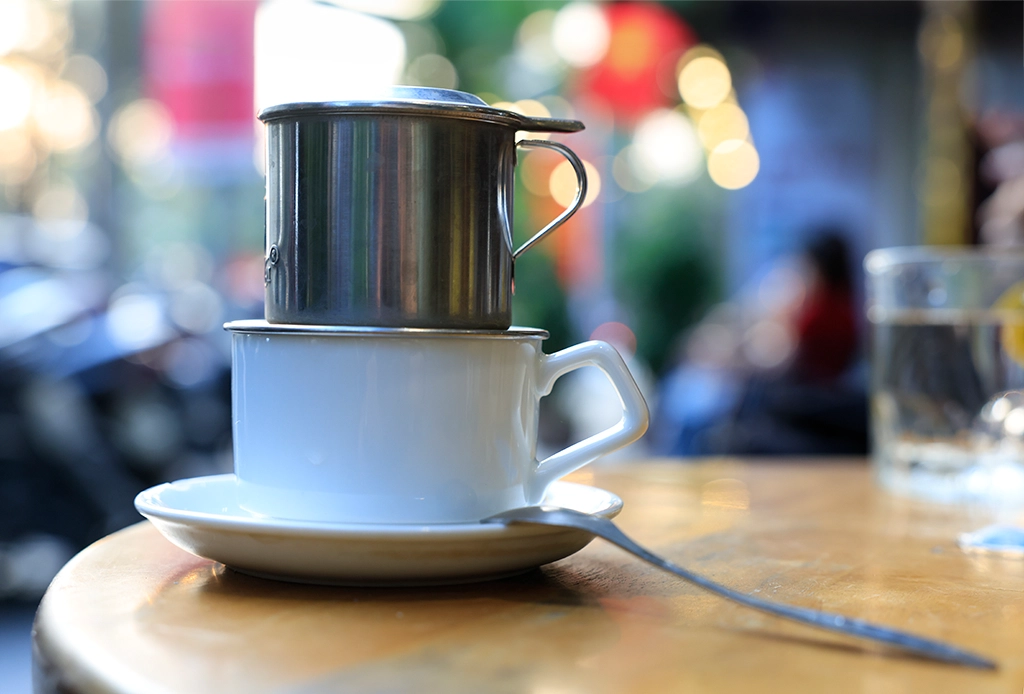
The quintessential Vietnamese brewing tool, the phin filter, is a testament to the confluence of French influence and local ingenuity. Unlike the high-pressure espresso machine or the rapid pour-over, the phin demands patience. Gravity does the work as water slowly leaches through the densely packed, dark-roasted grounds.
Historically, this slow drip mirrored the pace of life in 20th-century Vietnam. During the subsidy period (Thời bao cấp),when fresh milk was a luxury, the addition of sweetened condensed milk became the standard. This created the iconic cà phê sữa đá—a drink that is chemically a heavy-hitter of caffeine and sugar, yet socially consumed with extreme leisure.
The Birth of Invention: Cà Phê Trứng
In 1946, amidst a milk shortage during the First Indochina War, Nguyen Van Giang, a bartender at the Sofitel Legend Metropole Hanoi, whisked chicken egg yolks with sugar and coffee to create a meringue-like topping. This "Egg Coffee" was more than a recipe; it was a symbol of Vietnamese resilience—the ability to maintain the ritual of the café even when the "correct" ingredients were absent. Today, Café Giảng remains a pilgrimage site, illustrating how a wartime substitute evolved into a cultural cornerstone.
The Café as a Neutral Hybrid Space
Sociologically, the Vietnamese café functions as a "Third Place"—a term coined by Ray Oldenburg to describe spaces outside of home (the first place) and work (the second place). However, in Vietnam, the café takes on a unique "hybrid" role.
The Public-Private Paradox
Vietnamese domestic life is traditionally multi-generational and dense. Privacy within the home is often a rare commodity. Consequently, the café becomes an extension of the living room—a "private" space situated in the public eye.It is where business deals are brokered, where students study for hours over a single glass of tea (trà đá), and where lovers seek the anonymity of a crowded room.
The Concept of "Control"
The title of this essay includes "Control" because the café offers a rare autonomy over one’s environment. In the chaotic,sensory-overload of a city like Ho Chi Minh City, the café is a controlled micro-climate. Whether it is the curated playlist of a "concept" café or the specific sidewalk "territory" of a cà phê vỉa hè, the patron exerts control over their social interaction. You can be entirely alone in a crowd, or deeply engaged in a group, all within the safety of the café's boundaries.
Regional Atmospheres: A Tale of Three Cities
To understand the diversity of Vietnam’s coffee culture, one must look at the distinct "moods" of its major urban centers.
1. Hanoi: The Introspective Alleyway
In Hanoi, the café culture is one of concealment and history. Some of the city's most legendary establishments are located behind narrow shopfronts or up crumbling, yellow-walled staircases in the Old Quarter.
- The Aesthetic: "Vintagism" is the dominant language. Low wooden stools, communal tables, and a penchant for the "faded" look of the 1980s.
- The Social Vibe: Conversations are often hushed, competing with the sound of traffic from the street below. There is a sense of intellectualism—Hanoi cafés are spaces for writers, artists, and the preservation of "Old World" gravitas.
2. Hue: The Melancholic Ritual
The former imperial capital of Hue approaches coffee with the same poetic slowness that defines its cuisine.
- The Innovation: Cà phê muối (Salt Coffee). This specialty, featuring a salted cream top, perfectly encapsulates the Hue character—a balance of bitterness, sweetness, and a hint of the earth.
- The Space: Cafés in Hue often incorporate garden elements or views of the Perfume River. The pace is significantly slower than in the north or south, reflecting a city that takes pride in its refusal to rush.
3. Saigon (HCMC): The Dynamic Engine
Saigon’s café culture is a 24-hour phenomenon. It is the birthplace of the cà phê bệt (sidewalk sitting) and the ultra-modern "Specialty Coffee" labs.
- The Vibe: Entrepreneurial and energetic. Saigonese cafés are the engine rooms of the "gig economy." They are brightly lit, heavily air-conditioned, and designed for productivity.
- The "Vợt" Tradition: Despite the modernization, the cà phê vợt (stocking coffee) stalls—where coffee is brewed in large fabric filters over charcoal—still thrive, operating through the night to serve market workers and late-night revelers alike.
[Image comparing a rustic Hanoi hidden cafe with a modern high-tech Saigon coffee lab]
The Third Wave: Modernity and the Specialty Scene
As of 2026, Vietnam is no longer just a Robusta powerhouse; it is a burgeoning hub for specialty Arabica. A new generation of Vietnamese roasters and baristas—many of whom have studied in Melbourne or Seattle—are returning to Da Lat and Son La to refine the cultivation of high-altitude beans.
This "Third Wave" has introduced a new visual and social vocabulary to the city. The traditional phin is now accompanied by V60s, siphons, and Chemex brewers. However, unlike the "gentrification" often associated with specialty coffee in the West, in Vietnam, these spaces remain remarkably accessible. They are not elitist enclaves but part of a continuous spectrum of coffee appreciation that spans from the sidewalk stool to the minimalist concrete bar.
Photography Analysis: Capturing the Café Soul
Documenting café culture is an exercise in "Environmental Storytelling." The goal is to capture the relationship between the patron, the drink, and the urban context.
1. The Power of Side-Lighting (Window Light)
Most Vietnamese cafés use natural light as their primary source.
- Technique: Position your subject at a 45-degree angle to a window. This creates "Rembrandt lighting," where one side of the face is illuminated and the other falls into a soft shadow. This adds a layer of introspection and "mood" to the portrait.
- The Phin Shadow: Look for the rhythmic shadows cast by the phin filter on the table surface. It acts as a natural "leading line" toward the subject.
2. Reflections and Layering
The glass windows of street-front cafés are a gift for the documentary photographer.
- Technique: Photograph from the outside looking in. By balancing your exposure, you can capture the subject inside the café while simultaneously capturing the reflection of the chaotic street life (motorbikes, vendors) on the glass. This "layers" the private interior and the public exterior into a single, complex frame.
3. Managing Color Temperature (Kelvin)
Cafés often have a mix of light sources: warm incandescent bulbs, blue-ish natural daylight, and green-ish fluorescent kitchen lights.
- Technical Tip: Don't rely on "Auto White Balance." Set your camera to a specific Kelvin (K) value. Around 4500K to 5000K usually provides a good balance, retaining the "warmth" of the café's interior without making the skin tones look unnaturally orange.
4. The "Hands" Story
Sometimes, the person is less interesting than their interaction with the objects. A close-up of hands stirring condensed milk, or a hand resting on a well-worn book next to a half-empty glass, tells a story of "Time" more effectively than a wide shot.
The Ethics of the Observation
When photographing in a café, the photographer must navigate the "Public-Private" hybrid nature of the space.
- The Silent Shutter: Use a mirrorless camera with a silent shutter mode. The "clack" of a DSLR can break the delicate social atmosphere of a quiet Hanoi café.
- Seeking Consent through Interaction: Before taking a photo, buy a coffee. Become a patron first, a photographer second. Once you are part of the "ecosystem" of the room, people are much more likely to ignore your camera.
- The "No-Go" Zone: Avoid photographing people who are clearly engaged in private, emotional conversations or business negotiations. Respect the café's function as a "safe space."
Conclusion: The Enduring Ritual
Vietnam’s café culture is a living archive. It holds the history of colonial influence, the scars of war, the triumph of economic reform, and the aspirations of a digital future. Whether it is a bitter shot of Robusta on a busy street corner or a floral Arabica in a glass-walled tower, the act of ngồi cà phê remains the country's most vital social glue.
As we look toward the future, the café will continue to be the site where Vietnam negotiates its identity. It is where "Conversation" meets "Control," and where every drip from a phin filter is a reminder that in a world of constant movement, there is always time to stop, to look, and to remember.