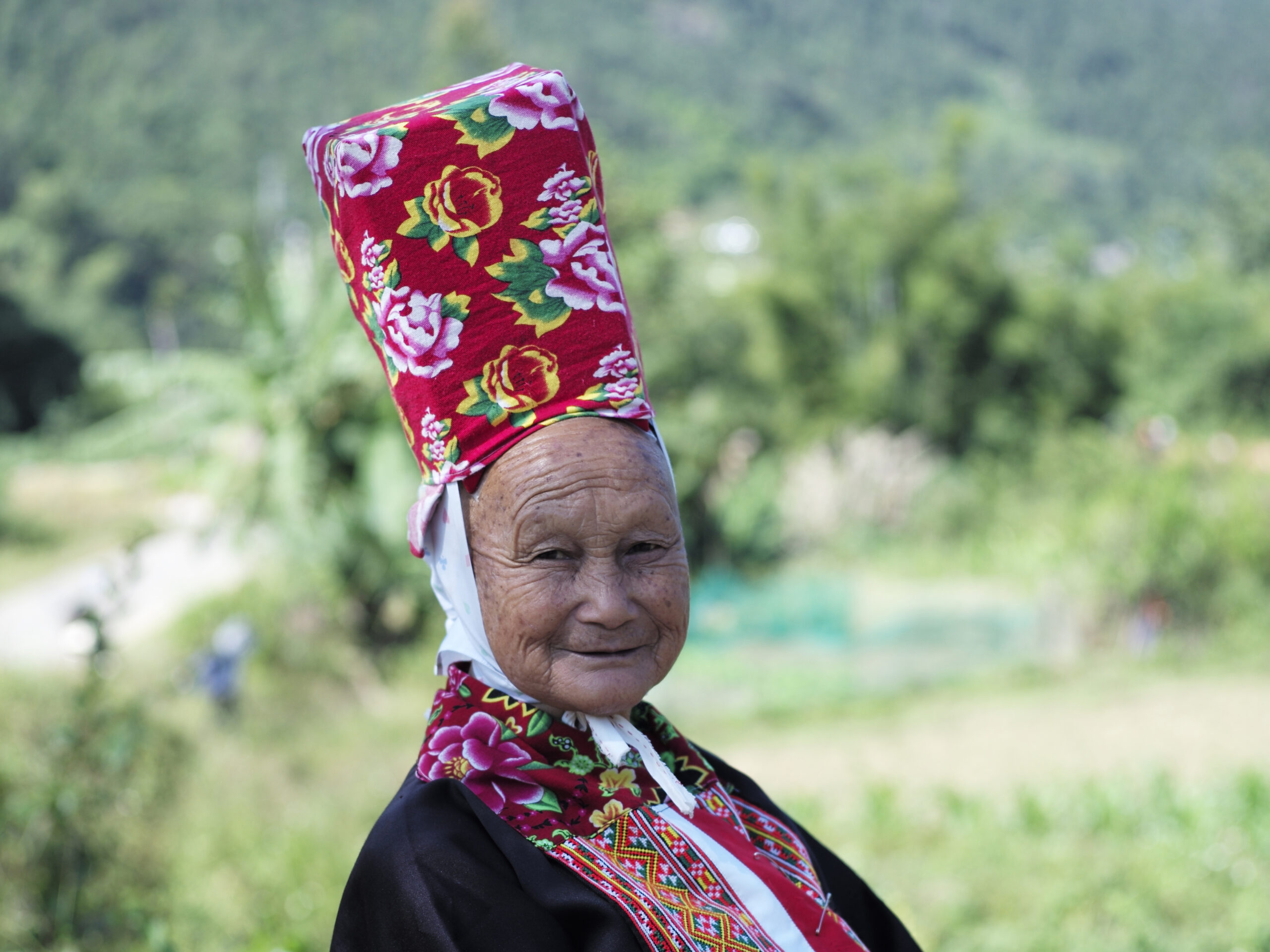
The northern highlands of Vietnam—stretching from the limestone pinnacles of Hà Giang to the mist-shrouded valleys of Sa Pa—are often reduced in the global imagination to a series of vibrant, saturated snapshots. For the casual traveler, the image of a Hmong woman in indigo-dyed hemp or a Red Dao elder in an elaborate scarlet headdress is a quintessential "Vietnam moment." However, for the serious photographer and the cultural observer, these images often skirt the surface of a much deeper, more complex reality.
To photograph the ethnic minorities of Northern Vietnam with integrity is to look past the "costume" and recognize the garment as a living historical document, a socio-economic indicator, and a profound statement of resistance and resilience. This article explores the intersection of photography, ethics, and ethnic identity, providing a roadmap for capturing the soul of the highlands without falling into the traps of exoticism or cultural voyeurism.
The Weight of the Thread: Understanding Cultural Depth
Northern Vietnam is home to over 50 distinct ethnic groups, with the Hmong, Dao, Tay, Nung, and Giáy being among the most prominent in the mountainous border regions. To photograph them effectively, one must first understand that their presence in these highlands is rarely accidental; it is the result of centuries of migration, adaptation, and the preservation of identity in the face of external pressures.
The Hmong: Resilience in Indigo
The Hmong are perhaps the most visually iconic group in the North. Their history is one of movement, having migrated from Southern China over the last three centuries. Their traditional dress is not merely decorative; it is a feat of engineering. The heavy, hand-spun hemp used in their clothing is chosen for its durability and warmth in the harsh mountain climate.
The intricate batik patterns—created by applying beeswax to fabric before dipping it into deep pits of fermented indigo—are often stylized representations of nature, ancestors, and the spiritual world. When you photograph a Hmong woman, you are not just capturing "colors"; you are capturing a lineage of craftsmanship that takes months of labor for a single garment.
The Dao: The Red and the Written
The Dao (Yao) people present a different aesthetic and cultural philosophy. The Red Dao, specifically, are famous for their silver jewelry and massive red turbans. Beyond the visual, the Dao are unique for their historical use of Chinese-derived characters to record their genealogies and religious rituals. Their embroidery is a geometric language, where every stitch on a trouser leg or a tunic collar denotes the wearer’s sub-group and social status. To photograph a Dao elder is to document a keeper of ancient Taoist-influenced scripts and medicinal knowledge that is increasingly under threat from modernization.
The Tay and Giáy: The Valley Dwellers
Contrast these with the Tay and Giáy, who typically inhabit the lower valleys. Their attire is often simpler—deep indigo tunics with silver button accents. Their identity is tied less to flamboyant embroidery and more to the architecture of their stilt houses and their sophisticated wet-rice cultivation techniques. Photographing these groups requires a shift in perspective, focusing on the harmony between their domestic spaces and the surrounding landscape.
Geography as a Weaver: Why Identity is Worn
In the highlands, identity is inextricably linked to geography. The distinction between "Flower Hmong," "Black Hmong," and "Blue Hmong" is often a matter of both lineage and location.
- Climate and Material: The use of silk, hemp, and cotton is dictated by what the land provides. In the high-altitude reaches of Đồng Văn, the wind-chill requires the dense layering seen in Hmong attire.
- Topography and Visibility: The bright colors of the Flower Hmong are often cited as a practical measure for visibility in the dense mountain fogs, allowing family members to spot one another across steep terraces.
- The Market as a Nexus: The weekly markets (such as Bắc Hà or Khâu Vai) are the primary theaters of identity.These are not tourist performances; they are vital economic and social hubs where clothing serves as a "passport," identifying one’s village and clan to potential trading partners or suitors.
The Ethics of the Lens: Decolonizing the Gaze
The power dynamic between a photographer with a $3,000 camera and a subsistence farmer is inherently lopsided. Ethics in this context is not a set of rigid rules, but a continuous practice of empathy and respect.
Consent vs. Compliance
There is a significant difference between a subject nodding because they are being polite and a subject who genuinely consents to being photographed. In many highland cultures, there is a belief that a photograph can capture or disturb one’s spirit. While this belief is fading among the younger generation, it remains a reality for many elders. Always ask. A simple gesture—pointing to your camera and waiting for a smile or a nod—is the bare minimum.
The Problem of "Poverty Porn"
Foreign photographers often fall into the trap of seeking out "authentic" poverty. They look for the dirtiest face, the most tattered garment, or the most "primitive" setting to create a sense of drama. This is a form of "poverty porn" that strips the subject of their dignity. True documentary photography should capture the strength, the agency, and the daily joys of these communities, not just their hardships.
Financial Compensation and Dependency
Should you pay for a photo? This is a debated topic. In high-traffic areas like Sa Pa, a "pay-per-photo" economy has emerged, which often leads to aggressive solicitation and the commodification of culture. A better approach is to support the local economy in other ways: buy their handicrafts, hire local guides, or stay in family-run homestays. If you are conducting a formal, timed portrait session, a fair "modeling fee" or a gift of fruit and household staples is appropriate.
Technical Breakdown: Capturing the Highlands
Photographing in Northern Vietnam presents unique challenges, from the unpredictable mountain weather to the high-contrast light of the valleys.
1. Lens Choice: Intimacy vs. Context
- The 35mm Prime: This is the quintessential lens for environmental storytelling. It is wide enough to capture the subject within the context of their home or field, yet narrow enough to avoid the distortion of a true wide-angle. It forces you to stand at a "conversational distance" from your subject.
- The 85mm Prime: For portraits, the 85mm is king. It provides a beautiful compression that makes the subject "pop" from the background while maintaining a respectful distance. It is ideal for capturing the intricate textures of silver jewelry or facial expressions without being intrusive.
- Avoid the "Sniper" Approach: Using a 300mm telephoto lens to "steal" shots from across a market is technically possible but ethically questionable. It removes the human connection from the process.
2. Mastering the Light
The "Golden Hour" in the mountains is fleeting. Often, the sun disappears behind a peak long before the actual sunset.
- The Blue Hour: In the high-altitude villages, the twilight "blue hour" provides a soft, ethereal light that complements the indigo tones of the clothing.
- Managing Mist: Use the mist as a natural softbox. It simplifies busy backgrounds and adds a sense of mystery. However, ensure you have a circular polarizer to cut through the haze when you want to capture the deep greens of the rice terraces.
3. Environmental Storytelling
A portrait of a person against a blank wall tells us very little. A portrait of a person sitting by their hearth (the bếp lửa), with smoke curling around them and corn drying from the rafters, tells a story of survival and domesticity. Look for layers: the subject in the foreground, their work (tools, textiles) in the mid-ground, and their land in the background.
Common Mistakes of the Foreign Photographer
Understanding what not to do is as important as knowing your camera settings.
- Treating People Like Wildlife: Some photographers roam through markets with long lenses, snapping photos of people as if they were on a safari. This creates a barrier of "otherness."
- Mislabeling Groups: One of the most common errors in travel journalism is misidentifying ethnic groups (e.g., calling a Nung person "Hmong"). If you don't know, ask your guide or the person themselves. Accuracy is the first step of respect.
- Ignoring the Modern: There is a tendency to crop out "modern" elements like motorbikes, cell phones, or plastic chairs to create an image of a "timeless" culture. By doing this, you are participating in a lie. The Highland people are modern citizens of Vietnam who happen to maintain ancient traditions. Capturing the tension between the old and the new is often more interesting than faking the past.
- The "Smile for the Camera" Trope: Forcing a subject to smile can feel performative. Often, a neutral, dignified expression is more powerful and authentic to the stoic nature of mountain life.
Building Trust: The Long-Term Approach
The best photographs are almost always the result of a relationship, however brief.
The Power of the "Return"
If you are a frequent visitor to Vietnam, the most impactful thing you can do is return to a village with printed copies of the photos you took on a previous trip. In many remote areas, high-quality physical prints are rare and cherished. This act transforms the photographer from a "taker" of images into a "giver" of memories.
Learning the "Social Graces"
Learn a few words in the local dialect—Chợ chi (Hmong for "Hello") or Cám ơn in Vietnamese. Participate in the local customs. If you are offered a cup of corn wine (rượu ngô), take a sip. If you are invited into a home, take off your shoes. These small gestures break down the "tourist" wall and open the door to genuine interaction.
Slowing Down
The "Ha Giang Loop" or the "Sapa Trek" are often treated as races. To photograph culture, you must be still. Spend three days in one village rather than visiting three villages in one day. Sit in the market and drink tea for an hour before even taking your camera out of the bag. Let the people get used to your presence until you become part of the background.
Conclusion: The Ethics of the Image
As the northern highlands continue to integrate into the global economy, the visual markers of ethnic identity are changing. Fast fashion is replacing hand-loomed hemp; traditional houses are being replaced by concrete structures. In this shifting landscape, the photographer’s role is more than just artistic; it is archival.
However, this archive must be built on a foundation of dignity. To photograph the Hmong, the Dao, or the Tay is to participate in the ongoing story of Vietnam’s diverse heritage. When we look "beyond the costume," we see individuals with complex lives, sharp wits, and an enduring connection to their ancestors. Our job is to ensure that the image we produce is as layered and profound as the people it represents.
By choosing the right lens—both literally and metaphorically—we can move from being mere observers to becoming witnesses. And in the mountains of Northern Vietnam, being a witness is the highest form of respect.
Data and Demographics: A Snapshot
To understand the scale of diversity in the region, consider the following statistics based on the 2019 General Statistics Office of Vietnam:
| Ethnic Group | Approximate Population (National) | Primary Regions in North | Key Textile Feature |
| Hmong | 1,393,547 | Hà Giang, Lào Cai, Yên Bái | Indigo batik, heavy hemp |
| Dao | 891,151 | Hà Giang, Tuyên Quang, Lào Cai | Intricate embroidery, silver |
| Tay | 1,845,492 | Lạng Sơn, Cao Bằng, Bắc Kạn | Simple indigo, silk headscarves |
| Nung | 1,083,298 | Lạng Sơn, Cao Bằng | Dark indigo, silver buttons |
"The camera is an instrument that teaches people how to see without a camera." — Dorothea Lange.
In the context of Northern Vietnam, the goal is to see the person, then the culture, and finally, the light.