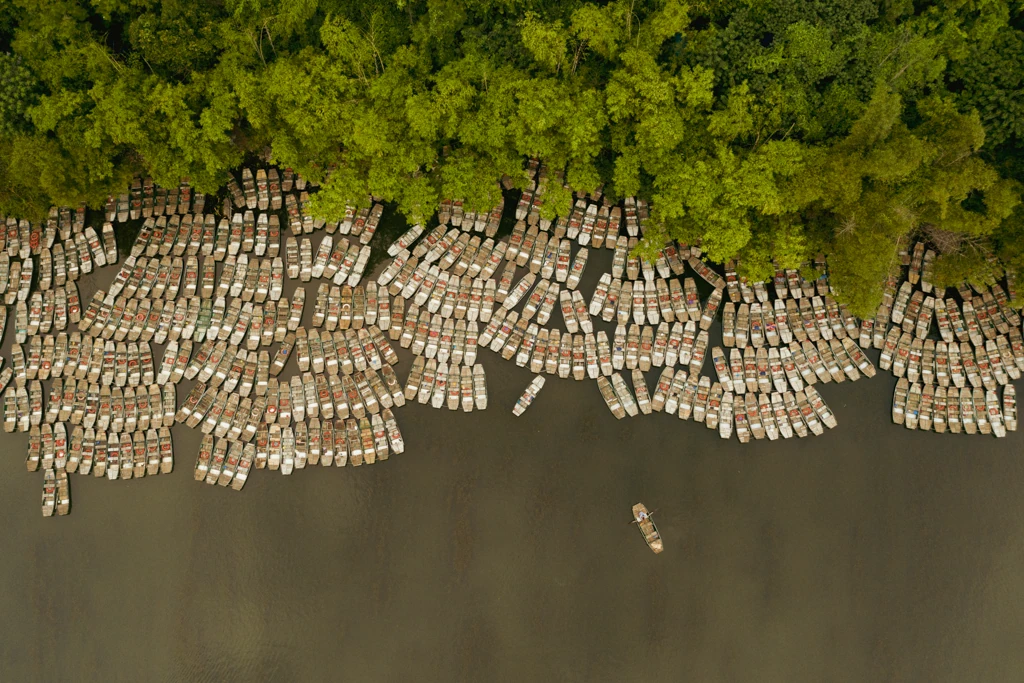
The first time you step off a plane in Hanoi or Ho Chi Minh City, the sensory overload is a physical weight. The humidity clings to your skin, the scent of fish sauce and exhaust fills the air, and the sheer volume of motorbikes creates a visual staccato that feels impossible to frame. Most photographers spend their first week in Vietnam chasing the chaos—the "spray and pray" method of capturing every conical hat and neon sign.
But after years of working this coastline, from the misty peaks of Ha Giang to the sun-drenched canals of the Mekong Delta, you realize that the real Vietnam isn't found in the chaos. It’s found in the pauses.
This is an article about the slow burn. It is for the photographer who has moved past the postcard and is looking for the pulse. These are the field notes from a decade behind the lens in the S-shaped land.
Visiting vs. Documenting: The Shift in Perspective
There is a fundamental difference between visiting Vietnam with a camera and truly photographing Vietnam. A visitor looks for the "exotic"—the scenes that confirm their preconceived notions of Southeast Asia. They want the farmer in the rice terrace, the incense seller in the temple, and the chaotic street crossing.
Documenting, however, requires you to look past the archetypes. It means realizing that the woman selling bún chả on a street corner isn't just a "subject"; she is a business owner, a mother, and a cornerstone of her neighborhood. When you stop seeing people as characters in a play and start seeing them as the protagonists of their own lives, your compositions change. You stop shooting from a distance with a telephoto lens and start stepping into the frame.
The Rhythm of Vietnamese Daily Life
Vietnam is a country that wakes up before the sun. If you aren't on the street by 5:00 AM, you’ve already missed the most important hour of the day.
The Morning Pulse
In every city and village, the dawn brings a specific choreography. The elderly gather by the lakes for Tai Chi, the markets swell with fresh produce, and the first hiss of steam rises from phở vats. This is when the light is at its most forgiving and the people are at their most active. By 10:00 AM, the heat forces a retreat.
The Midday Lull
One of the most profound lessons learned after years here is the "Art of the Nap." Between 12:00 PM and 2:00 PM, the country goes quiet. Shop owners sleep on their motorbikes; workers doze in hammocks. Photographing this stillness requires a different kind of sensitivity. It’s a time for quiet, textural work—the way the harsh sun creates high-contrast shadows on yellow colonial walls.
Regional Light: A Geographic Guide
Light does not behave the same way in Hanoi as it does in Saigon. Understanding this is crucial for planning your shoots.
The North: The Painterly Mist
In the North, especially during winter and spring (December to March), you are dealing with a permanent "softbox." The humidity creates a low-hanging mist (nồm) that diffuses light, muting colors and softening edges. This is ideal for moody,cinematic portraiture and landscape work in places like Sapa or Ha Long Bay. You don’t get many "golden hours" here,but you get a consistent, ethereal glow.
The Central Coast: The Dramatic Contrast
Central Vietnam—Da Nang, Hue, and Hoi An—is the land of the "Blue Hour." Because the mountains meet the sea, the weather can change in minutes. After a tropical downpour, the sky often clears to a deep, bruised purple just as the lanterns of Hoi An begin to glow. The light here is sharp and directional.
The South: The Tropical Punch
Ho Chi Minh City and the Mekong Delta are defined by intense, direct sunlight. The colors are more saturated, and the shadows are deep. Here, you have to be a master of exposure. The "Golden Hour" in the South is fleeting but spectacular,casting a long, amber glow over the river networks.
Cultural Sensitivity and the Role of Trust
In Vietnam, a camera can be a bridge or a barrier. After years of shooting, I’ve found that the best portraits are never "taken"—they are given.
The Power of the "Xin Chào"
Never underestimate the power of a greeting. Approaching a subject with your camera down, offering a smile and a "Xin chào" (Hello), changes the dynamic instantly. In rural areas, especially among ethnic minority groups in the Highlands,rushing in with a camera is considered deeply disrespectful.
Building the Bridge
Trust is built in the minutes before the shutter clicks. It’s about sitting on a low plastic stool, drinking a cup of trà đá (iced tea), and showing genuine interest in the person’s work. When you eventually raise the camera, they aren't posing for a stranger; they are sharing a moment with a guest.
Field Note: Always show your subjects the back of the screen. In Vietnam, people love to see how they look. It breaks the ice and often leads to a second, more relaxed series of shots.
Observational Discipline vs. “Spray and Pray”
With modern digital cameras capable of 20 frames per second, it’s tempting to hold the shutter down and hope for the best. This is the death of intentional photography.
Vietnamese life is dense. If you "spray and pray" in a market, you end up with a mess of limbs, motorbikes, and distracting backgrounds. Years of shooting here teach you to find the "anchor." You find a background with great light,you frame your shot, and you wait. You wait for the right person to walk into the frame. You wait for the moment the smoke from a grill catches the light. This discipline results in one "hero" shot rather than a hundred mediocre ones.
Common Mistakes Foreign Photographers Make
Even seasoned pros stumble when they first arrive. Here are the most frequent pitfalls:
- Ignoring the Background: Vietnam is cluttered. A beautiful portrait is easily ruined by a stray power line or a bright plastic chair growing out of someone’s head.
- Over-Saturation: Beginners often pump up the saturation to capture the "vibrancy" of Asia. The reality of Vietnam is often found in the subtle, earthy tones of the countryside and the weathered textures of the cities.
- Fear of the Rain: Many pack their gear away when the clouds open. In reality, the rain provides some of the most unique storytelling opportunities—reflections in puddles, the colorful chaos of rain ponchos, and the grit of the city under a storm.
- Missing the Context: A tight headshot is nice, but without environmental context, it could be anywhere. Use wide lenses (28mm or 35mm) to tell the story of the space the person occupies.
The Professional Workflow: From Field to Edit
Working as a documentary photographer in Vietnam requires a workflow that accounts for the environment.
Field Challenges: Weather and Access
The humidity is your greatest enemy. I carry my gear in weather-sealed bags and always keep silica gel packets in my lens pouches. Transitioning from an air-conditioned hotel to the 95% humidity of the street will instantly fog your glass. You have to give your gear 20 minutes to acclimate before you can shoot.
The Editing Philosophy
When it comes to post-processing documentary work from Vietnam, the goal is authenticity over artifice.
- Color Grading: I tend to pull back the yellows and greens slightly, as the tropical sun can make them look radioactive in digital RAW files.
- Contrast: I look to replicate the "film look" of the 1970s—lowering the highlights and lifting the blacks to give the image a more tactile, printed feel.
- Selection: The hardest part of the workflow is the "kill." If an image doesn't contribute to the narrative of the project, it goes, no matter how technically perfect it is.
Final Reflections
After years of shooting in Vietnam, the greatest lesson I’ve learned is that the country is not a "subject" to be captured. It is a living, breathing entity that you must learn to dance with. You cannot force a shot here; you can only be ready when the country decides to show itself to you.
The "Field Notes" you carry shouldn't just be about aperture and ISO. They should be notes on the smell of the rain before a monsoon, the specific pitch of a street vendor's cry, and the warmth of a smile from a stranger who has seen it all.
If you want to take better photos in Vietnam, put your camera in your bag for the first hour of every day. Just walk.Observe the light. Listen to the rhythm. Once you understand the song, the pictures will practically take themselves.