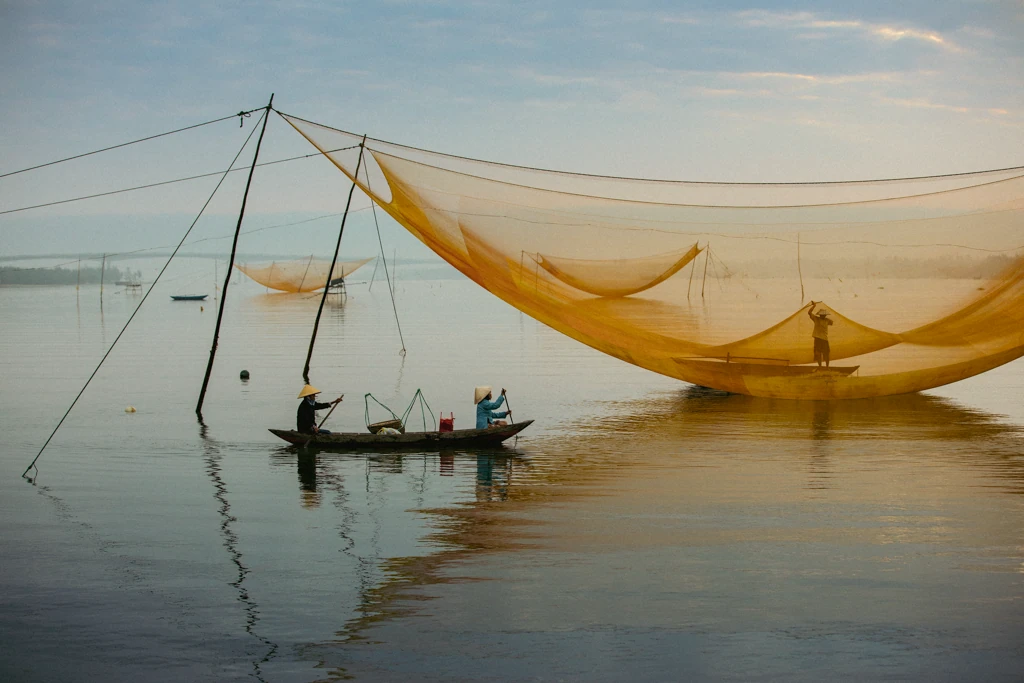
The visual lexicon of Vietnam is dominated by a few persistent ghosts. There is the incense drying in magenta bundles in Quang Phu Cau; the fisherman casting a net in a perfect, golden circle on the Thu Bon River; the woman in the white ao dai walking through a sunlit corridor in Hue. These images are undeniably beautiful, yet they have become the "postcards" of our collective photographic consciousness. To the serious practitioner, they represent a trap: the comfort of the cliché.
To photograph Vietnam creatively in 2026 is to engage in an act of visual deconstruction. It requires looking past the surface level of "exoticism" and finding a more complex, nuanced truth. This article explores how to move beyond the expected and develop a personal, artist-driven language in one of the most photographed countries on earth.
The Anatomy of the Cliché and How to Avoid It
The cliché is not a lie; it is a tired truth. The reason we see so many photos of the Mu Cang Chai rice terraces is that they are objectively spectacular. However, when we replicate a composition we have seen a thousand times on Instagram, we aren't making art—we are performing an act of mimesis.
Deconstructing the "Iconic" Shot
To avoid the postcard, you must first identify its components. Most "cliché" Vietnam photos rely on high saturation,centered subjects, and a lack of tension. To break this, try changing your physical relationship to the scene. If everyone is shooting the rice terraces from the designated "viewpoint" at the top of the pass, go to the bottom. Shoot upward. Look for the messy, uncurated details: a plastic water bottle on a terrace wall, a farmer checking his smartphone, or the way electricity lines cut through the "perfect" landscape. These elements introduce reality into a scene that has been idealized into sterility.
The Power of the "In-Between" Moment
Originality in Vietnam is often found in the transitions. Instead of photographing the performance at a temple, photograph the performer backstage smoking a cigarette. Instead of the bustling market at its peak, photograph the quiet, weary cleanup at 10:00 AM. These "non-moments" carry a psychological weight that the peak action lacks.
Finding Originality in Over-Photographed Locations
Locations like Hoi An or Ha Long Bay present the ultimate creative challenge: how do you find a new angle on a place that has been looked at by millions?
The Macro Perspective of a City
In Hoi An’s Ancient Town, the yellow walls are legendary. Instead of shooting the street, zoom in on the textures. The layers of peeling paint, the moss growing in the cracks of 200-year-old bricks, and the way the shadow of a tropical leaf falls across a wooden door can tell a more intimate story of time and decay than a wide shot of the Japanese Bridge.
Weather as a Creative Filter
Most tourists pack their cameras away when the heat haze settles or the rain starts. This is your opportunity. A "heat-distorted" long-lens shot of a Saigon intersection can look like an impressionist painting. A monsoon downpour in Hue turns the Imperial City into a series of gray-on-gray silhouettes, stripping away the distraction of color and forcing the viewer to focus on form and geometry.
Technical Artistry: Shooting Against the Light
In the West, we are often taught to keep the sun at our backs. In Vietnam, the most evocative work happens when you shoot directly into the light (contre-jour).
Managing the Flare
Vietnam’s high humidity creates a natural haze that catches the light. When you shoot into the sun, this haze glows,creating a sense of depth and atmosphere. The technical challenge is managing lens flare and maintaining contrast. By slightly stopping down your aperture (to f/8 or f/11), you can turn the sun into a "starburst" and use the natural flare to wrap around your subjects, giving them an ethereal, glowing rim.
Silhouettes and Mystery
By exposing for the highlights of a sunset over the Mekong, you can reduce your subjects to pure black silhouettes. This strips away individual identity and turns the people in your frame into universal symbols of labor, transit, or rest. It invites the viewer to fill in the details with their own imagination.
The Psychology of Color: Red, Green, and Earth Tones
Vietnam is a masterclass in color theory. To shoot here effectively, you must understand the cultural and emotional weight of the palette.
The Red of Revolution and Celebration
Red is the dominant color of the Vietnamese psyche. It is the flag, the wedding decor, the temple lanterns, and the incense.In your compositions, red acts as a powerful visual anchor. A tiny speck of red in a vast green landscape will immediately draw the eye. Use it sparingly to guide the viewer through your frame.
The Infinite Greens
Between the rice paddies of the North and the jungles of the South, you will encounter every conceivable shade of green.The challenge is "color separation." Digital sensors often struggle to distinguish between similar shades of green,resulting in a "mushy" look. To fix this, look for "warm" greens (yellow-toned) against "cool" greens (blue-toned), or use a polarizing filter to remove the reflective glare from wet leaves, revealing the true saturation beneath.
The Earth Tones of the Interior
In the Central Highlands, the color palette shifts to ochre, burnt sienna, and deep browns. These are the colors of the earth and the traditional longhouses. Photographing in these tones creates a sense of groundedness and history, a stark contrast to the neon-drenched "Cyberpunk" aesthetic of modern Ho Chi Minh City.
Negative Space and Human Scale
The Vietnamese landscape is vast, but it is rarely empty. The creative use of negative space can emphasize the relationship between the land and the people who toil upon it.
Using the Void
In a rural landscape, don't feel the need to fill every inch of the frame. A lone figure at the very bottom of a frame, with 90% of the image being a misty gray sky or a vast green hill, creates a sense of "Human Scale." It illustrates the humility of the individual against the scale of nature.
The Rule of Thirds vs. Centered Weight
While the Rule of Thirds is a useful starting point, placing a subject in the extreme corners of a wide-angle landscape can create a "pulling" sensation, making the viewer feel the distance the subject has traveled.
Building Long-Term Visual Projects
The difference between a "travel photographer" and a "documentary photographer" is the ability to work in themes.Instead of individual "great shots," aim to build a body of work.
Finding Your "Hook"
A project could be as simple as "The Motorbikes of Saigon" or as complex as "The Changing Face of the Mekong Delta's Water Culture." By narrowing your focus, you force yourself to see deeper. You start noticing patterns, recurring symbols,and the subtle ways a culture is evolving.
The Narrative Arc
A successful project needs a beginning, middle, and end. It should ask a question. For example, if your project is about the urbanization of Hanoi, your images should show the tension between the old colonial villas and the rising glass skyscrapers. The "meaning" of the work comes from the friction between these two worlds.
Personal Creative Evolution: From Hunter to Gatherer
When I first arrived in Vietnam, I was a "hunter." I actively sought out moments, chased light, and felt a sense of panic if I wasn't constantly shooting. Over the years, I have evolved into a "gatherer."
The Art of Stillness
Now, I often spend hours in a single location without taking a single photo. I wait for the environment to settle. I wait for the people to stop seeing me as a photographer and start seeing me as part of the furniture. This is when the real, unposed moments happen.
Moving Toward Meaning
Meaningful work in Vietnam isn't about "capturing" the culture; it's about reflecting on your own experience within it.Your photos should be a mirror of your curiosity. If you are bored, your photos will be boring. If you are confused,empathetic, or overwhelmed, let that bleed into the frame. The most creative approach is, ultimately, the most honest one.
Conclusion: The Ethics of the Artistic Eye
As we strive for "creative" and "original" shots, we must never forget the human beings on the other side of the lens.Creativity should never come at the expense of dignity. In Vietnam, where the hospitality is legendary, it is easy to overstep.
The most "meaningful" work you will ever produce is the work that shows the world something it didn't know about Vietnam—not just its beauty, but its resilience, its humor, and its relentless drive toward the future.
Stop looking for the postcard. Start looking for the pulse.