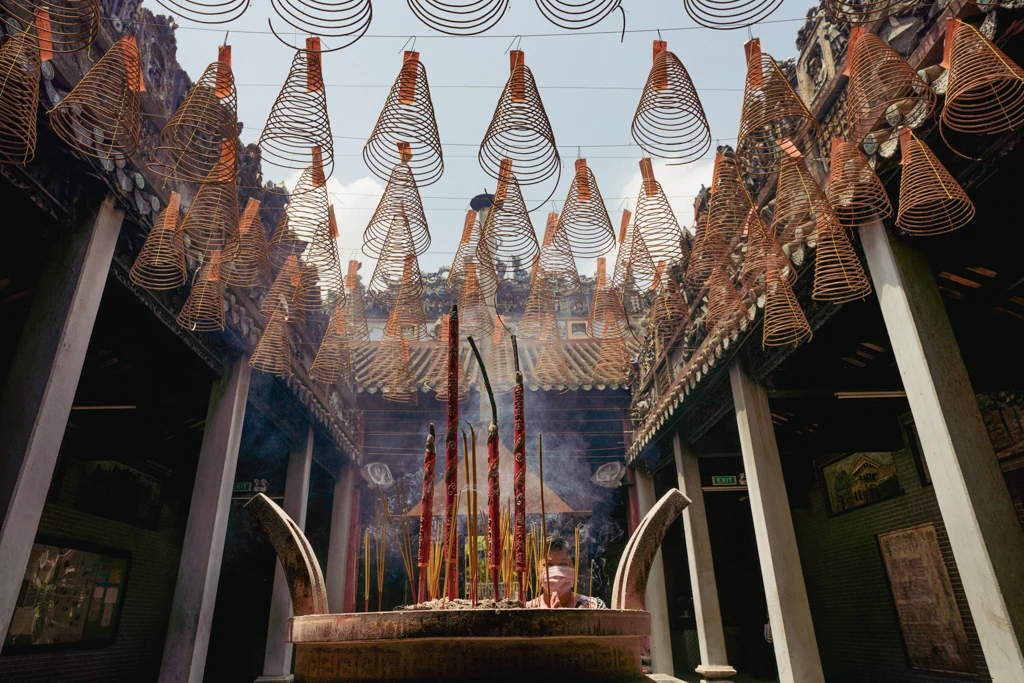
In the corner of nearly every Vietnamese home—from the sleek, high-rise apartments of modern Hanoi to the thatched stilt houses of the northern highlands—there exists a space that transcends the physical. It is often draped in red silk, illuminated by the steady glow of electric candles, and scented with the lingering, earthy fragrance of agarwood. This is the bàn thờ (ancestral altar), the most sacred geography in the Vietnamese landscape.
Ancestor worship (Tín ngưỡng thờ cúng tổ tiên) is not a religion in the Western sense of dogmatic adherence or centralized clergy. Instead, it is a profound moral philosophy and a lived practice of memory. It is the "invisible thread" that binds the living to the dead, ensuring that no soul is truly forgotten. For the cultural observer and the photographer, understanding this tradition is essential to understanding the Vietnamese psyche. To capture these rituals is to document the very heart of the nation’s identity.
The Philosophical Roots: Filial Piety and the Continuity of Being
At the core of Vietnamese ancestor worship lies the concept of Hiếu (Filial Piety). Derived from Confucian thought but deeply localized over two millennia, Hiếu dictates that one’s life is not an individual possession but a gift from a long lineage of progenitors. The Vietnamese proverb “Uống nước nhớ nguồn” (When drinking water, remember the source) encapsulates this perfectly.
The Parallel Existence
In the Vietnamese worldview, death is not an end but a transition. The soul is believed to reside in a parallel realm, yet it remains intimately connected to the physical world. The ancestors are seen as protective deities; they watch over the family, offer blessings, and can even be affected by the actions of their descendants. This creates a reciprocal relationship: the living provide the dead with "sustenance" (incense, food, and prayer), and the dead provide the living with spiritual security.+2
The Social Function of Memory
Beyond the spiritual, ancestor worship serves a vital social function. It is the primary mechanism for family cohesion. By gathering for death anniversaries, disparate branches of a clan reinforce their shared history. In a society that has faced centuries of war, displacement, and rapid modernization, the altar serves as a fixed point—a grounding force that reminds the individual of their place in a narrative that began long before their birth.
The Altar: Mapping the Sacred Within the Secular
The bàn thờ is the focal point of the household. Its placement is never accidental; it is governed by Phong Thủy (Feng Shui) and traditional hierarchy.
Anatomy of the Altar
A traditional altar is a complex arrangement of symbolic objects:
- The Incense Burner (Bát hương): Considered the "bridge" or the "telephone" to the afterlife. It is the most sacred object; once placed, it is rarely moved.
- Ancestral Tablets or Photos: These provide the visual focus for memory. Modern altars often feature framed photographs of the deceased, capturing them in moments of dignity.+1
- The Five-Fruit Tray (Mâm ngũ quả): Representing the five elements of Eastern philosophy (Metal, Wood, Water, Fire, Earth) and the desire for "Phúc, Lộc, Thọ, Khang, Ninh" (Happiness, Wealth, Longevity, Health, Peace).
- Water and Wine: Elements of purification and hospitality.
The Geometry of Offerings
Offerings are a language. On the 1st and 15th of the lunar month, the offerings are simple: flowers, fruit, and tea. However, during major events, the altar becomes a banquet. The presence of Bánh chưng (square sticky rice cake) or a boiled rooster represents the bounty of the land and the family’s labor, offered back to those who cleared the land generations ago.
Rituals of the Calendar: Giỗ and Tết
While the altar is tended daily, certain times of the year see the "membrane" between worlds thin significantly.
Giỗ: The Death Anniversary
In the West, birthdays are celebrated; in Vietnam, the Giỗ (death anniversary) is of far greater importance. It is a day of "invitation." The family prepares a feast, burns incense, and formally invites the spirit of the deceased to return and dine with them. It is a celebratory, rather than somber, occasion—a time for storytelling where the virtues and quirks of the ancestor are recounted to the younger generation.
Tết: Inviting the Ancestors Home
During the Lunar New Year (Tết), the relationship between the living and the dead reaches its zenith. Before the celebrations begin, the family visits the graves of their ancestors (Tảo mộ) to clean them and invite the spirits home for the holidays. The ancestors are considered guests of honor throughout the three days of Tết. The incense must not go out, symbolizing that the "door" to the home remains open for the spirits to share in the family's joy.
Visual Symbolism: The Language of Smoke and Fire
To photograph these rituals effectively, one must understand the semiotics of the materials used.
Smoke: The Ladder to Heaven
Incense is not merely for fragrance. The smoke rising from a joss stick is viewed as a "ladder" or a medium of communication. It carries the whispers of prayer from the physical realm into the spiritual. Visually, the swirling patterns of smoke represent the intangible nature of the soul—always present, yet impossible to grasp.
Fire and Light: The Spark of Life
The candles or oil lamps on the altar represent the Dương (masculine/life) energy. They provide warmth and light, ensuring the altar is not a place of "cold" death but of "warm" memory. The flicker of the flame is often interpreted by practitioners; a steady flame suggests a peaceful spirit, while a dancing flame might indicate a message being sent.
The Color Palette: Red and Gold
In the context of worship, Red symbolizes luck, vitality, and the bloodline. It is the color of the altar cloths and the "lucky money" envelopes often placed as offerings. Gold (or yellow) represents royalty, the heavens, and prosperity. Together, they create a visual environment that is regal and auspicious, elevating the act of remembrance above the mundane.
Documenting the Sacred: A Guide for Photographers
Photographing ancestor worship is a delicate balancing act. You are entering a space where the "subjects" are not just the people in the room, but the spirits they believe are present.
The Ethics of Observation vs. Intrusion
Before you touch your shutter button, you must establish your presence.
- Seek Permission: Never photograph an altar or a ritual without an explicit invitation. In a private home, it is customary to bow slightly toward the altar as a sign of respect before beginning your work.
- The "Moment of Prayer": When a person is actively bowing or holding incense with closed eyes, this is a moment of deep intimacy. If you must shoot, do so from a distance with a silent shutter. Do not break their concentration.
- Dress Code: Even if you are "just the photographer," dress conservatively. Cover your shoulders and knees. You are a guest in a sacred space.
Technical Challenges: Low Light and Confined Spaces
Most ancestral rituals take place in dimly lit interiors, often illuminated by a mix of harsh fluorescent lights and the warm, orange glow of candles.
- Managing Color Temperature: The "clash" of light sources can be jarring. If you set your White Balance to "Auto," the camera may struggle.
- Pro Tip: Set your White Balance manually (around 3200K to 4000K) to preserve the warmth of the candles while preventing the skin tones from looking too orange.
- Lenses for Intimacy: * 35mm Prime: Ideal for capturing the person and the altar in one frame (environmental portraiture).
- 24mm Wide-Angle: Necessary for cramped city apartments where you cannot step back. Be careful of edge distortion.
- 85mm Prime: Best for "detail" shots—the weathered hands of an elder holding incense, or the texture of the fruit offerings.
- Exposure Strategy: * Don't be afraid of high ISO (3200+). Modern cameras handle noise well, and a grainy, "filmic" look often suits the atmosphere of a ritual better than a sterile, flash-lit image.
- Avoid Flash: Flash destroys the ambiance of the candles and incense smoke. It is also highly intrusive and distracting to the practitioners.
Compositional Storytelling in Ritual
To move beyond a "snapshot," look for layers that tell the story of continuity.
- The Generational Frame: Frame a shot with a grandchild in the foreground and an elder at the altar in the background. This visually represents the transmission of culture.
- The Silhouette of Smoke: Position yourself so the light from a window or a lamp catches the incense smoke against a dark background. This creates a sense of "mystery" and spirituality.
- Detail and Texture: Focus on the "small" things—the ash falling from a joss stick, the reflection of the family in the glass of a portrait, the steam rising from the offering bowls.
The Modern Altar: Tradition in the Digital Age
As Vietnam becomes one of the most tech-savvy nations in Asia, ancestor worship is adapting.
- Virtual Altars: Many young Vietnamese living abroad maintain "digital altars" or use apps to track death anniversaries.
- Modern Offerings: It is now common to see paper "votive" offerings (vàng mã) shaped like iPhones, luxury cars, or even COVID-19 vaccines—a testament to the belief that the afterlife mirrors the needs of the modern world.
As a photographer, don't ignore these "modern" elements. They are not "inauthentic"; they are evidence of a living, breathing tradition that refuses to be relegated to a museum. The sight of an elder checking a lunar calendar on a smartphone before lighting incense is a quintessentially Vietnamese 2026 moment.
Conclusion: The Ethics of Memory
To photograph ancestor worship in Vietnam is to be entrusted with a family’s most private history. The camera should not be a barrier, but a bridge. When done with respect, photography becomes an extension of the ritual itself—another way of ensuring that the "source" is remembered.
The true success of an image in this context is not measured by its sharpness or its composition, but by its ability to convey the "weight" of the air in the room—the mix of woodsmoke, nostalgia, and the enduring power of family. In the end, we are all just "drinking water." Our role is to make sure the "source" remains visible for the generations to follow.