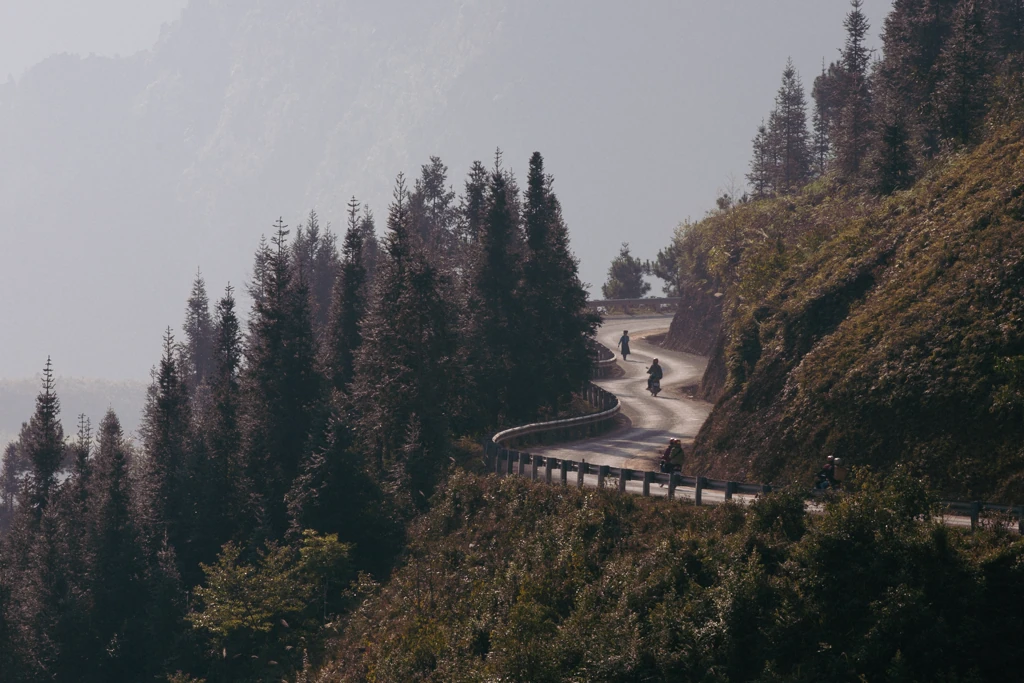
Planning a photography expedition in Vietnam is an exercise in managing the "Atmospheric Variable." With only ten days, the classic "North-to-South" traverse often results in more time spent in transit than behind the lens. For the serious photographer, the goal is not to see the whole country, but to capture the definitive light of a specific region.
This strategic itinerary focuses on the North and Central "Heritage" Loop. This route offers the highest density of diverse subjects—dramatic limestone landscapes, ethnic minority cultures, and ancient urban street life—while minimizing logistical "dead time."
The Strategic Core: Route Overview
- Genre Focus: 40% Landscape, 30% Street/Urban, 30% Cultural Documentary.
- Primary Hubs: Hanoi, Mù Cang Chải, and Hội An.
- Best Window: September – October (Rice harvest in North, dry-to-wet transition in Central) or March – April(Spring mist and blooming Highlands).
Days 1–3: The High-Altitude Harvest (Mù Cang Chải)
While Sapa is famous, Mù Cang Chải offers a more raw, architecturally pure landscape of rice terraces.
Day 1: The Transit and The Ridge
- 06:00 – 12:00: Transfer from Hanoi to Mù Cang Chải via private car (approx. 6–7 hours).
- 15:00 – Sunset: Photograph the Tú Lệ Valley. The light here hits the valley floor early; look for the "S-curve" of the river reflecting the sky.
- Strategic Tip: Book a private driver. Public buses are cheaper but prevent you from stopping at the Khau Phạ Pass—one of the "Four Great Passes" of Vietnam—where you can capture wide-angle vistas of the valley below.
Day 2: The "Sticky Rice" Hill
- Sunrise: Mâm Xôi (Sticky Rice) Hill. This is the quintessential shot.
- The Plan: Arrive 45 minutes before sunrise. Position your tripod to catch the first light hitting the circular terrace patterns.
- Afternoon: Lao Chải or Chế Cu Nha. These villages offer "Environmental Storytelling" opportunities—Hmong farmers in traditional dress working the steep slopes.
Day 3: The Return to the Capital
- Sunrise: Dế Xu Phình. Often less crowded than Mâm Xôi, providing a cleaner frame for minimalist landscape work.
- 12:00 – 18:00: Return transfer to Hanoi.
- Logistical Fatigue Management: Do not plan a night shoot. Use this evening for data backup and sensor cleaning.
Days 4–5: Hanoi — The Pulse of the North
Hanoi is a city of "Side-Light" and "Shadows." Its narrow alleys and lakes provide a distinct cinematic mood.
Day 4: The Lake and the Alley
- Sunrise (05:30): Hoàn Kiếm Lake. Capture the early morning exercise rituals in the soft, blue-gold light.
- Mid-Morning: The "Train Street" (Phùng Hưng section). Use a fast prime lens (35mm or 50mm) to capture the compressed life along the tracks.
- Evening: Long Biên Bridge. Photograph the sunset over the Red River, using the rusted Eiffel-designed steel as a framing device for motorbikes.
Day 5: The Artisans and The Flight
- Morning: Quảng Phú Cầu (Incense Village). Located 1 hour from Hanoi.
- The Shot: The "blooms" of red incense sticks drying on the ground. Use a high-vantage point (ask locals to access a roof) for graphic, top-down compositions.
- 18:00: Late evening flight from Hanoi to Da Nang, followed by a 45-minute transfer to Hội An.
Days 6–8: The Heritage Coast (Hội An & Huế)
Central Vietnam offers a shift from the rugged North to a more poetic, historical aesthetic.
Day 6: The Yellow City
- Sunrise: Duy Vinh or Cẩm Kim. Take a boat across the river to see the fishing nets (rớ giàn) being raised.
- The Technique: Use a shutter speed of 1/500s to freeze the water droplets falling from the nets against the morning sun.
- Night: Hội An Old Town. Focus on the reflections of lanterns in the Thu Bồn River.
Day 7: The Coastal Traverse
- 08:00 – 11:00: Travel from Hội An to Huế via the Hải Vân Pass.
- Landscape Opportunity: Stop at the summit for views of Lăng Cô Bay. In 2026, clear weather allows for views all the way to Da Nang’s skyline.
- Afternoon: The Citadel (Imperial City). Focus on the red-and-gold architecture. The long, shaded corridors are perfect for exploring "Leading Lines."
Day 8: The Tombs and The River
- Sunrise: Thanh Toàn Bridge. A rare tiled-roof bridge surrounded by rice fields.
- Mid-Morning: The Tomb of Khải Định. This is a masterpiece of "Texture Photography"—the walls are covered in intricate porcelain and glass mosaics.
- 17:00: Sunset boat on the Perfume River.
Days 9–10: Final Frames and Contingencies
Day 9: The Inland Sea (Ninh Bình)
- Transit: Take the early morning train (SE1 or SE3) or a flight back to Hanoi and a 2-hour transfer to Ninh Bình.
- Afternoon: Tràng An or Tam Cốc.
- The Shot: Photograph the limestone karsts from a paddleboat. Use the "Over-the-Shoulder" perspective of the rower to add a human element to the scale of the mountains.
Day 10: The High View and Departure
- Sunrise: Mua Cave (Lying Dragon Peak). Climb the 500 steps before dawn.
- The Reward: A 360-degree view of the Ngô Đồng River snaking through the rice fields.
- 14:00: Final transfer back to Nội Bài International Airport (Hanoi) for departure.
Technical and Strategic Planning Advice
1. Travel Time Estimates (2026 Infrastructure)
- Hanoi to Mù Cang Chải: 6.5 hours (Road).
- Hanoi to Da Nang: 1 hour 20 mins (Flight).
- Da Nang to Hội An: 45 mins (Road).
- Hội An to Huế: 2.5–3 hours (via Hải Vân Pass).
- Huế to Hanoi: 1 hour 15 mins (Flight).
2. Gear Considerations
- Lenses: * Landscape: 16-35mm (Citadel, Ninh Bình).
- Compression: 70-200mm (Mù Cang Chải terraces).
- Street: 35mm f/1.8 (Hanoi, Hội An).
- Filters: A Circular Polarizer is essential for managing the haze and the glare on the river water.
3. Weather Risk & Backup Plans
- The "North Mist" Risk: If Mù Cang Chải is completely fogged out, pivot your focus to Village Documentary. The Hmong people's vibrant textiles pop beautifully against a grey, misty background.
- The "Central Flood" Risk: If Hội An floods (common in Oct/Nov), do not cancel. This is the best time for "Reflective Water" photography. Rent a boat and shoot the town as a "Water City."
4. Sunrise/Sunset Logistics
In Vietnam, "Golden Hour" is short.
- Morning: 05:45 – 06:45.
- Evening: 17:15 – 18:15.
- Strategy: Arrive at your location 45 minutes prior. The "Civil Twilight" (pre-sunrise/post-sunset) often provides the most saturated colors in the tropics.
The Decision-Making Framework
If you have limited time and must choose between locations, prioritize based on your primary genre:
| Primary Goal | Focus Area | Recommended Months |
| Grand Landscapes | Mù Cang Chải & Ninh Bình | Sept (Harvest) / June (Green) |
| Cultural Portraits | Hà Giang or Sapa | Feb (Blossoms) / Sept |
| Street & Architecture | Hanoi, Huế, Hội An | March – April (Clear skies) |
Conclusion: The Strategic Path
A 10-day route through Vietnam is not about checking boxes; it is about respecting the light. By focusing on the North-Central axis, you allow yourself the "breathing room" required for creative observation. You move beyond being a tourist with a camera and become a photographer who understands the rhythm of the Vietnamese day.